
Choosing between Victron Energy and Renogy usually comes down to whether you are building a standalone power source or a fully integrated energy system.
Both Victron Energy and Renogy brands make pure-sine-wave inverters that convert DC battery power to AC power. Both brands have reliable products and loyal customers, but they are built for different kinds of buyers, different system sizes, and different levels of technical involvement.
This guide walks through both lineups in detail, including specific models from each brand, so you can see exactly where each product fits and which one makes sense for your situation.
Table of Contents
- Understanding the Two Brand Philosophies
- The Victron Energy Phoenix Inverter Lineup
- The Renogy Inverter Lineup
- Hidden Costs and Ecosystem Differences
- Software, Monitoring, and Ecosystem Lock-In
- Support and Serviceability
- Surge Capacity: The Practical Difference
- Direct Model Comparisons
- Who Should Buy Victron
- Who Should Buy Renogy
- Final Summary
Understanding the Two Brand Philosophies
Victron Energy designs its products for permanent, integrated energy systems. The Phoenix inverter models we have been able to get our hands on for review here at Inverter Geek span 12V, 24V, and 48V systems from 250VA to 1200VA, and all are built around toroidal transformer technology. That means heavy copper windings, a longer service life, and better surge handling than most budget competitors. Every Phoenix model includes a VE.Direct port for monitoring and programming through the VictronConnect app. Nothing in the Renogy lineup matches that level of programmability right out of the box.
Renogy designs its products for the DIY builder who wants results quickly and affordably. The P2 and PUH models we have reviewed at Inverter Geek range from 700W to 3000W at 12V and use high-frequency MOSFET switching instead of toroidal transformers. That makes Renogy units lighter, cheaper, and easier to install. The trade-off is a lower surge ceiling and a shorter expected service life than with Victron.
Neither approach is wrong. They serve different needs. The question is which need matches yours.
The Victron Energy Phoenix Inverter Lineup
The Victron Phoenix models we have been able to get our hands on and review at Inverter Geek span three voltage classes. In the 12V range we reviewed the 250VA, 375VA, 800VA, and 1200VA. In the 24V range we reviewed the 250VA, 375VA, 500VA, 800VA, and 1200VA. In the 48V range we reviewed the 250VA, 375VA, 500VA, and 800VA. Every one of them produces a pure sine wave output and includes the VE.Direct port.
Victron Energy 12V Models: 250VA to 1200VA Inverters
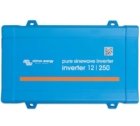
Victron Energy 12V 250VA Inverter Review
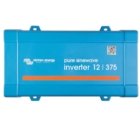
Victron Energy 12V 375VA Inverter Review
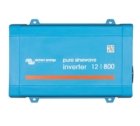
Victron Energy 12V 800VA Inverter Review
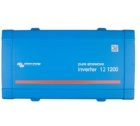
Victron Energy 12V 1200VA Inverter Review
Victron Energy 24V Models: 250VA to 1200VA Inverters
The 24V range delivers the same output wattage as the 12V equivalents, but at half the DC. That means thinner cables, smaller fuses, and less heat in the wiring. For any permanent installation where cable runs exceed 1.5 meters, the 24V platform is worth serious consideration.
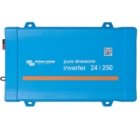
Victron Energy 24V 250VA Inverter Review
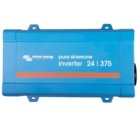
Victron Energy 24V 375VA Inverter Review
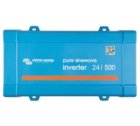
Victron Energy 24V 500VA Inverter Review
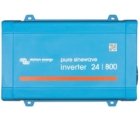
Victron Energy 24V 800VA Inverter Review
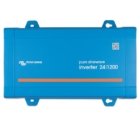
Victron Energy 24V 1200VA Inverter Review
Victron Energy 48V Models: 250VA to 800VA Inverters
The 48V Phoenix models are built for telecommunications, server rooms, residential solar backup, and remote monitoring applications. The defining characteristic of the 48V range is the extraordinarily low DC input current.
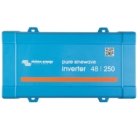
Victron Energy 48V 250VA Inverter Review
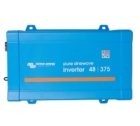
Victron Energy 48V 375VA Inverter Review
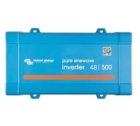
Victron Energy 48V 500VA Inverter Review
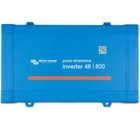
Victron Energy 48V 800VA Inverter Review
One critical installation note for all 48V Phoenix models: the MIDI fuse must be rated at 58V or higher. The 32V-rated MIDI fuses used across the 12V and 24V Phoenix models are not safe for 48V circuits. This is not a minor detail. A 32V fuse on a 48V circuit may not interrupt safely under fault conditions.
The Renogy Inverter Lineup
Renogy splits its lineup into two series: P2 and PUH. The models we have reviewed at Inverter Geek and featured on Inverter Geek span that full split. That distinction matters more to many buyers than wattage.
The P2 models are standard inverters that convert DC to AC. No built-in charger, no automatic power source switching, and no built-in app connectivity.
The PUH models are 3-in-1 units that add a built-in Automatic Transfer Switch and Bluetooth. If you ever plan to plug into shore power, the PUH series is the right choice. If you will never see a wall outlet or a campground pedestal, the P2 series is simpler and less expensive.
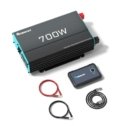
Renogy 700W Inverter P2 Without BT & ATS Review
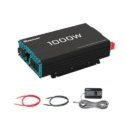
Renogy 1000W Inverter Without BT & ATS Review
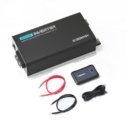
Renogy 1000W Inverter PUH With BT & ATS Review
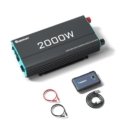
Renogy 2000W Inverter P2 Without BT & ATS Review
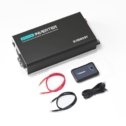
Renogy 2000W Inverter PUH With BT & ATS Review
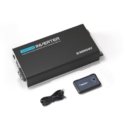
Renogy 3000W Inverter PUH With BT & ATS Review
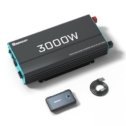
Renogy 3000W Inverter P2 Without BT & ATS Review
Hidden Costs and Ecosystem Differences
The Real Cost of Owning Victron
A Victron inverter is a premium product, and its true power comes from the ecosystem around it. New buyers often discover too late that getting the most from a Victron Phoenix involves additional purchases beyond the inverter itself.
To monitor the system remotely, most buyers will want a Cerbo GX or GlobalLink device for central system monitoring. Without one, monitoring is limited to the VictronConnect app through a Bluetooth dongle or a direct USB connection—the VE.Direct Bluetooth Smart Dongle is a separate purchase for each Phoenix model. The VE.Direct to USB Interface is a separate purchase for PC-based configuration.
To see accurate battery state-of-charge percentages on a display, a SmartShunt or BMV-712 battery monitor is nearly mandatory. Without one, the inverter knows its input voltage but not the remaining capacity of the battery bank.
None of these add-ons is required to run the inverter. The inverter will work right out of the box. But to get the system intelligence that justifies the Victron price premium, those accessories are part of the real cost of a complete installation.
The Renogy Approach: What You See Is What You Get
Renogy products are generally designed to work without additional accessories. The P2 series includes battery cables and a wired remote in the box. The PUH series includes built-in Bluetooth and an ATS. The Renogy DC Home app is simpler than Victron’s VRM portal, which is exactly what most weekend builders want. Checking battery levels and inverter status on a phone before a camping trip does not require professional-grade telemetry or remote cloud logging.
The out-of-pocket cost to get a functioning Renogy system on the road is lower than that for a Victron system in almost every comparison. That simplicity is a genuine advantage for the buyer who does not want to manage an ecosystem of communicating devices.
Software, Monitoring, and Ecosystem Lock-In
Victron’s VRM (Victron Remote Management) portal is widely considered the best monitoring platform in the consumer off-grid space. It provides professional-grade telemetry, historical logging, and remote troubleshooting. From anywhere with an internet connection, you can see every amp flowing through the system, view historical trends, and diagnose faults without being physically present. That capability is genuinely valuable for a full-time off-grid home, a remote cabin, or a boat that goes offshore.
The VRM portal works best when every component in the system is a Victron product. A Victron Phoenix inverter, a Victron MPPT solar charge controller, a Victron SmartShunt battery monitor, and a Cerbo GX all communicate through the VE.Bus protocol and appear as a single unified system in the portal. Mixing in non-Victron components is possible, but the integration is less seamless.
Renogy’s DC Home app is designed for simplicity and accessibility. It meets the monitoring needs of most weekend and casual builders with no configuration beyond initial Bluetooth pairing. It lacks the deep data logging and system-level integration that VRM provides. For a van owner who wants to check their battery state and inverter load before making a cup of coffee, that simplicity is an advantage. For a full-time off-grid homesteader who wants to track system performance over months and seasons, the Renogy app will eventually feel limited.
Support and Serviceability
This is one of the most significant real-world differences between the two brands.
Victron Energy sells primarily through a dealer network. If you have a problem with your unit, contact the dealer you purchased from. That is a good experience if you buy from a reputable specialist who knows the product and can provide real technical support. It is frustrating when you buy from a marketplace reseller who is not equipped to troubleshoot a Phoenix inverter configuration issue. Choose your Victron dealer as carefully as you choose the inverter itself.
Victron units are often repairable at the board level. The toroidal transformer design that makes them heavier also makes them more serviceable than compact high-frequency inverters. A ten-year-old Victron Phoenix can receive a component-level repair and return to service. That is unusual in this product category and part of the reason Victron’s total cost of ownership over a decade compares more favorably than the upfront price difference suggests.
Renogy handles its own warranty and technical support directly. Support is accessible via chat and email. During peak camping and RV seasons, users often report longer wait times for specialized technical help. Renogy units are generally replaced under warranty rather than repaired, which is standard for consumer electronics at this price point.
Surge Capacity: The Practical Difference
This is where the build philosophy difference shows up most clearly in real-world use.
Victron uses heavy copper toroidal transformers. They are built to absorb the inductive kick of motor loads, compressor starts, and power tool startups without tripping protection. The Victron 12V 1200VA’s 2400W peak surge from a 1000W continuous unit is a reliable, repeatable number that you can design around. When a well pump or an air conditioner kicks on, the toroidal transformer handles the surge through its physical mass and design rather than through software that tries to react fast enough.
Renogy uses high-frequency MOSFET switching technology. These designs are lighter and more efficient for constant, moderate loads like LED lights, laptops, and fans. Under high-surge motor loads, the MOSFET-based design is more sensitive to voltage spikes and may engage protection more quickly. The Renogy 3000W Inverter PUH‘s 6000W surge rating handles air conditioner and well pump starts in practice, but its behavior during repeated high-surge cycles differs from that of a toroidal design.
For a build that primarily powers electronics, laptops, and light appliances, this difference is academic. For a build that regularly starts heavy inductive loads like air conditioners, well pumps, table saws, or air compressors, the toroidal architecture of the Victron Phoenix is the better long-term choice.
Direct Model Comparisons
Light Loads: Victron 12V 800VA vs. Renogy 1000W P2
These two units target similar use cases: van builds, weekend campers, and off-grid setups where the primary loads are a laptop, a fridge, and device charging. The Victron 12V 800VA delivers 700W continuous and 1500W surge. The Renogy 1000W P2 delivers 1000W continuous and 2000W surge. On paper, the Renogy wins the wattage comparison by a meaningful margin.
The Victron advantage is programmability and build life—the VE.Direct port lets you set precise voltage thresholds for your specific battery chemistry, program a Dynamic Cut-off curve to prevent false shutdowns during surge events, and monitor real-time wattage in VictronConnect. The Renogy 1000W P2 offers none of that without the separately purchased BT-2 dongle, and even with the dongle, the programmability does not reach Victron’s depth.
For a weekend build on a budget, the Renogy 1000W P2 is the straightforward and sensible choice. For a permanent install where the system will run for years and battery protection matters, the Victron 12V 800VA is worth the price difference.
Shore Power Builds: Victron with Filax vs. Renogy PUH
If shore power is part of the plan, the comparison shifts significantly. Victron Phoenix inverters do not include an ATS. To get automatic shore power switching with a Victron Phoenix, you need to add a Victron Filax automatic transfer switch as a separate unit. That adds cost and installation complexity, but the Filax transfers in under 20 milliseconds, fast enough that a connected PC or router will not reboot during the switch.
The Renogy PUH series builds the ATS directly into the inverter. The Renogy 1000W Inverter PUH, the Renogy 2000W Inverter PUH, and the Renogy 3000W Inverter PUH all include a built-in Automatic Transfer Switch that handles shore-to-battery switching automatically. The ATS switching time is longer than that of Filax, which can cause a brief power gap that reboots sensitive PCs. For most household loads, that gap is invisible. For desktop computers, plan accordingly.
For a camper van or RV that regularly connects to campground pedestals, the Renogy PUH series delivers the ATS functionality you need at a price point that does not require sourcing a separate transfer switch, for a professional install where millisecond-level switching matters, the Victron plus Filax combination is the more capable solution.
High Power: Victron 24V 1200VA vs. Renogy 3000W P2
At high wattage, the voltage platform difference becomes a meaningful installation factor. The Victron 24V 1200VA delivers 1000W continuous at 24V, which means the DC input current peaks at around 60A at full load. The 100A MIDI fuse and 8 AWG cable required for this installation are manageable in most vehicles and off-grid setups.
The Renogy 3000W Inverter P2 delivers three times the continuous wattage at 12V, but doing so requires handling over 250 amps of DC continuously. That requires 4/0 AWG cable, ring lugs, a proper crimper, and careful torquing of every terminal connection. The cable runs are heavy, the fuse is large, and the heat generated in a poorly terminated connection at 250 amps is a real safety concern.
The Renogy 3000W P2 is absolutely the right tool for a high-power workshop or an off-grid system that needs to run a table saw or a large air compressor. But the installation demands at 12V and 3000W are significant. If the same power level could be delivered from a 24V or 48V system, the wiring overhead drops dramatically.
Who Should Buy Victron
Victron is the right choice if you are building a system that will last 5 to 10 years or more. Full-time van lifers, live-aboard boaters, and off-grid homesteaders are the natural Victron customers. The toroidal transformer construction, the precise programmability through VictronConnect, the long-term serviceability, and the VRM monitoring ecosystem all earn their cost over years of daily use.
Victron is also the right choice if you are running heavy inductive loads like air conditioners, well pumps, power tools, or any motor that demands a reliable surge capacity well above its running wattage. The physical design of the toroidal transformer handles those surges in a way that high-frequency switching inverters handle less gracefully over repeated cycles.
If you enjoy managing and understanding your system data, configuring voltage thresholds, reviewing historical consumption trends, and diagnosing efficiency issues from an app, Victron’s ecosystem is built for you. The VRM portal and VictronConnect give you more system visibility than any comparable consumer-level product.
Who Should Buy Renogy
Renogy is the right choice for the weekend warrior, the first-time builder, and the buyer who needs a functional system without a steep learning curve or a large upfront investment. A Renogy P2 inverter out of the box, connected to a battery with the included cables and powered on with the included remote, delivers clean AC power with no configuration required.
The PUH series is the right choice for any build that touches shore power, whether that means campground pedestals, garage outlets, or RV park hookups. The built-in ATS handles switching automatically, and the built-in Bluetooth lets you monitor apps without purchasing an additional dongle. For a camper van build that spends weekends at campgrounds and weekdays at home plugged in, the Renogy 2000W Inverter PUH delivers exactly the right capability at a practical price.
Renogy is also the right choice if weight and physical size are primary concerns. High-frequency inverters are significantly lighter than toroidal transformer designs at the same wattage. A Renogy 2000W unit weighs considerably less than a Victron unit built for comparable sustained output. In a motorcycle camper, a small cargo trailer, or a build where every pound matters, that difference is real.
Final Summary
Both Victron Energy and Renogy build products that deliver clean, reliable power from DC battery banks. The decision between them is really a decision about what kind of system you are building and how long you expect to use it.
Renogy wins on value, simplicity, and the PUH series’s built-in ATS for mixed-use builds. The 700W P2 through the 3000W PUH cover almost every wattage need a van, truck, or RV builder will encounter. The out-of-pocket cost to get a working system on the road is lower, and the installation is simpler.
Victron wins on build quality, programmability, surge reliability, and ecosystem depth. The Phoenix line, from the small 12V 250VA through the capable 48V 800VA, is designed for a decade of service, not two or three years—the VE.Direct port, VictronConnect app, and VRM portal give you system intelligence that Renogy’s platform cannot match. The toroidal transformer handles inductive load surges with a physicality that high-frequency designs cannot replicate.
If you are building a system for this weekend’s camping trip and need it done by Friday, buy Renogy. If you are building a system for the next ten years of full-time off-grid living and want to understand every amp flowing through it, buy Victron. Both brands will deliver clean power. The difference is how long, how smart, and how deep you want that system to go.