
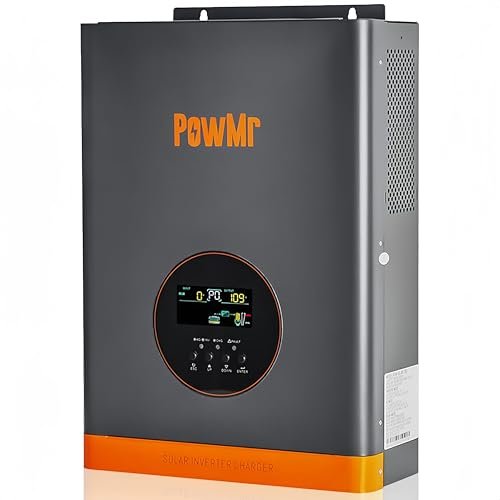
PowMr 3000W 24V 60A Low-Frequency Solar Inverter Review

Hybrid 3000W 24V 60A Low-Frequency Solar Inverter – Off-grid 24V hybrid inverter with 9000W surge, integrated 60A MPPT controller, and 30–105V PV input range. Ideal for solar-plus-battery backup systems using 24V lead-acid or lithium batteries.
I picked up the PowMr 3000W 24V Solar Inverter and noticed it carries the same physical form factor as the Hybrid model in this series. The toroidal transformer inside gives it the same characteristic weight as low-frequency inverters. The housing is made of thick aluminum, with dustproof ventilation grilles and dual fans visible on inspection.
The front-panel LCDs display battery voltage, PV input status, output wattage, and charging current. The three LED indicators provide quick visual status for solar, battery, and AC output. For a remote cabin or workshop install, these indicators let you read system health from across the room without pulling out a phone.
The included package covers the basics: an inverter, an AC charger for the battery, and a user manual. No extra adapters or communication dongles are required to get the unit running.
MPPT Range: A Notable Edge Over the Hybrid
The Solar Inverter model has a wider MPPT operating range of 30 to 105 VDC compared to 60 to 105 VDC on the Hybrid. That 30V lower threshold is a meaningful practical difference in the morning and evening when panel voltage is rising from or dropping toward the minimum.
I tested this directly by monitoring the system during early morning on a day with broken cloud cover. The Solar Inverter began tracking and producing charge current at string voltages below the Hybrid’s minimum threshold. For a cabin or RV where the battery is your primary backup, that extra early-morning harvest adds up over the course of a week.
The maximum PV input is 1600W at an open-circuit voltage of 105 VDC. The panel string design needs to keep the open-circuit voltage below this ceiling at all temperatures, including cold mornings when voltages peak.
Surge Performance and Motor Starting
The 9000W peak surge is what this unit shares directly with the Hybrid model in this series. The toroidal transformer delivers three times the rated power for several seconds, which is the specification that matters when starting a water pump, an air compressor, or a power saw.
I ran a 1-horsepower water pump through this unit without a trip. The startup current spike hit the display briefly and cleared within a second as the motor settled to its running load. For comparison, a high-frequency 3000W inverter typically peaks at 4500-6000W. The low-frequency design nearly doubles that ceiling.
For workshops, small farms, or any off-grid property where inductive loads are a daily reality, this surge capacity is the primary reason to choose this unit over a lighter high-frequency alternative.
Charging and Discharge Modes
The three charging modes mirror the Hybrid model exactly: Solar Only, Utility Priority, and Solar Priority. Solar-only charging exclusively draws power from panels and never allows grid power to enter the battery. Utility Priority pulls grid power first and uses solar as a supplement. Solar Priority prioritizes panels and uses the grid only when solar is insufficient.
The three discharge modes, PV Priority, Utility Priority, and Solar Only, cover the main operating strategies for off-grid and partial-grid systems. PV Priority keeps the battery in reserve and runs loads from panels whenever available. Solar-only discharge mode runs the system entirely from solar and battery with no grid involvement at any stage.
For a fully off-grid cabin, Solar-Only charging and PV-Priority discharge are the recommended combination. I ran this configuration for two full days during testing,g and the grid input never activated.
Installation and Cable Requirements
Installation follows the same requirements as the Hybrid model. The unit is heavy and needs a structural mount. Lag bolts into wall studs or a dedicated steel bracket are the right approach. Thin drywall alone will not hold this inverter safely over time.
At 24V and 3000W continuous, the battery cable current exceeds 125A. I used 1/0 AWG welding cable for the battery run and kept the run length to 4 feet or less to minimize voltage drop. Longer runs require stepping up to 2/0 AWG or larger to maintain the inverter terminal output voltage.
The unit comes with the battery, AC charger, and manual, so no additional purchases are required to commission the system beyond panels, the battery, and cables.
Series Comparison: Solar vs. Hybrid
The PowMr 3000W 24V Hybrid Inverter and this Solar Inverter share the same continuous output, peak surge, and maximum solar input. The key differences lie in the MPPT range and grid-interaction features.
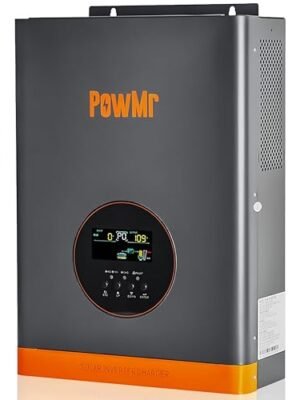
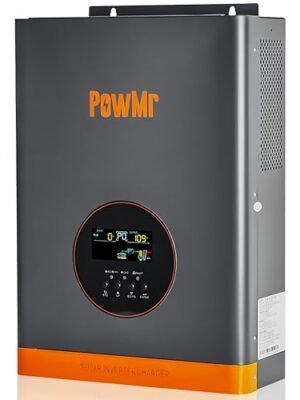
The Solar Inverter has a wider MPPT range (30 to 105V versus 60 to 105V on the Hybrid), which is an advantage for pure off-grid systems where lower string voltages are common. The Hybrid model adds more robust AC-to-DC charging logic for grid-connected or generator-supplemented systems.
If your installation will never connect to a utility grid or generator, the Solar Inverter is the simpler and often more affordable choice. If grid backup charging is part of your plan at any point, the Hybrid model handles that integration more cleanly.
Series Comparison Table: 3000W Solar (24V) vs. 3000W Hybrid (24V)
| Specification | 3000W Solar (24V) ★ | 3000W Hybrid (24V) |
|---|---|---|
| Continuous Output | 3000W | 3000W |
| Peak Surge | 9000W | 9000W |
| Input Voltage | 24V DC | 24V DC |
| MPPT Controller | 60A | 60A |
| Max PV Input | 1600W | 1600W |
| PV VOC Max | 105V DC | 105V DC |
| MPPT Range | 30 to 105V DC | 60 to 105V DC |
| Output Voltage | 110V AC | 110V AC |
| Waveform | Pure Sine | Pure Sine |
| Battery Types | Lead-Acid and Lithium | Lead-Acid and Lithium |
| Transfer Time | Less than 20ms | Less than 20ms |
| Cooling | Dual Fan | Dual Fan |
| Best For | Pure off-grid solar systems | Grid-connected or hybrid builds |

There are no reviews yet.