
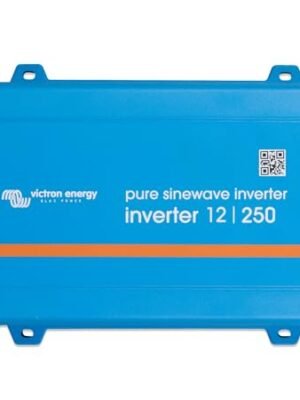
The Victron Energy 12V 250VA Inverter is the stealth minimalist of the 12V world. It is sized for the weekend camper who needs to charge a camera battery, run a small LED light string, or power a single low-draw device. The nearly invisible ECO mode idle draw of 0.8W and the completely silent convective cooling make it the right choice for anyone who wants to tuck an inverter away and forget it is there.
★★★★★
More details +
I picked up the Victron Energy 12V 250VA for a weekend camper van build, where the only AC need was a camera battery charger and an LED light string. I mounted it inside a small cupboard using the bracket holes and wired it with 12 AWG cable in under 20 minutes. The unit has been completely silent every time I use it. The 0.8W ECO mode idle draw means leaving it switched on overnight costs less than half an amp-hour from my battery bank. The VictronConnect programmability through the Bluetooth dongle is genuinely useful at this wattage, letting me dial in the exact low-battery cut-off for my specific lead-acid bank. The only thing to plan around carefully is the 200W ceiling; know your load list before choosing this over the 375VA.
PROS:
- Smallest and lightest in the 12V Phoenix range; fits under a seat or in a compact cabinet.
- 0.8W ECO mode idle draw, the lowest in the entire 12V lineup
- Completely silent convective cooling with no fan at any normal load level
- VE. Direct port enables full VictronConnect programmability, including Dynamic Cut-off and low-battery shutdown
- Pure sine wave output compatible with CPAP machines, camera chargers, and all sensitive electronics
- Toroidal transformer design delivers a 10 to 15-year design life
- 400W peak surge handles LED driver and power converter startup spikes
CONS:
- 200W continuous ceiling limits the load list to one or two small devices
- No battery cables included; must be sourced and sized separately
- Single NEMA 5-15R outlet only; no hardwire port on compact chassis
- 60A MIDI Fuse must be purchased separately before commissioning
- Toroidal hum at 25 to 30 dB is audible if mounted on thin resonant panels without vibration mounts
- 12V input requires the thickest DC cable in the Phoenix range for equivalent wattage
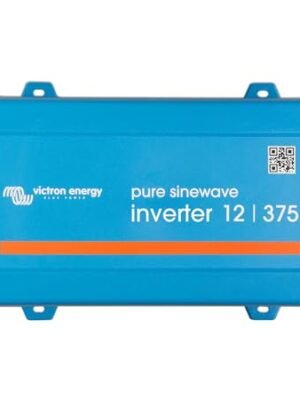
The Victron Energy 12V 375VA Inverter is the techie companion for 12V vehicles. It is built for users who need to power a gaming laptop, a medium-sized drone charger, or a device that demands more than a cigarette lighter adapter can supply. The VictronConnect integration is the standout feature here. I could see in real time exactly how many watts my laptop was pulling, and I set the low-battery shutdown to a precise threshold that protected my battery bank without cutting power prematurely.
★★★★★
More details +
I pulled the Victron Energy 12V 375VA out of its box and mounted it under the passenger seat of a van in about 15 minutes. I ran a gaming laptop charger through it and opened VictronConnect on my phone. Watching the real-time wattage spike to 180W during a heavy processing load and settle back to 45W at idle was something I have not seen on any other inverter at this price point, the VE. Direct port and the Dynamic Cut-off programmability justify the Victron premium here. The 300W ceiling is the one honest constraint; if a blender is anywhere on your load list, go straight to the 800VA.
PROS:
- 300W continuous covers a gaming laptop, drone charger, and monitor simultaneously
- 700W peak surge handles LED power converters and small electronics startup spikes
- 0.9W ECO mode idle draw is among the lowest in the 12V range
- VictronConnect shows real-time wattage draw per device, uniquely useful for power budgeting
- Convective cooling is completely silent at all normal load levels
- Programmable Dynamic Cut-off prevents false shutdowns during battery voltage sag
- Toroidal build quality targets a 10 to 15-year lifespan
CONS:
- 300W continuous will not run a blender, hair dryer, or any appliance with a motor
- No battery cables included
- Single NEMA 5-15R outlet only
- 80A MIDI Fuse must be sourced separately
- Toroidal hum requires rubber vibration mounts on resonant mounting surfaces
- 12V platform requires heavier cable than 24V or 48V equivalents at the same wattage
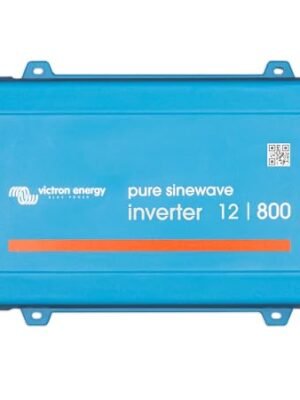
The Victron Energy 12V 800VA Inverter is the sweet spot for the average van-lifer who does not run a microwave. It handles a laptop, a 12V compressor fridge, a blender, and phone charging without the heavier cabling demands of the 1200VA model. The 1500W peak surge gives it enough punch to start most small motor loads, and the compact chassis fits under a seat or in a cabinet where the 1200VA would be too large.
★★★★★
More details +
I set the Victron Energy 12V 800VA next to the 1200VA on my bench and concluded this is the unit most van-lifers actually need. It handles a laptop, a 12V compressor fridge, a blender, and phone charging without issue. The 1500W surge cleared most motor startups I threw at it. The fan only engaged under loads above roughly 400W and returned to silence when the load dropped. I torqued the 6 AWG terminals carefully and ran a 30-minute sustained load test with no thermal events. If you are not running a microwave, this unit saves money compared to the 1200VA model without sacrificing meaningful capability.
PROS:
- 700W continuous covers a laptop, compressor fridge, blender, and device charging simultaneously
- 1500W peak surge handles most small motor loads without tripping
- 1W ECO mode idle draw keeps overnight battery drain negligible
- Active temperature-controlled fan stays silent under light loads
- VE.Direct port with full VictronConnect programmability
- Large chassis with M8 bolt-style terminals rated for high-current connections
- Pure sine wave and toroidal transformer rated for a 10 to 15-year lifespan
- Approximately 91% conversion efficiency
CONS:
- No battery cables included; 6 AWG required for short runs
- 125A MIDI Fuse must be purchased separately
- Fan is audible at approximately 45 dB under sustained heavy loads
- Will not start a standard microwave; 1200VA required for that load
- Toroidal hum requires rubber vibration mounts on thin panels
- Single NEMA 5-15R outlet only
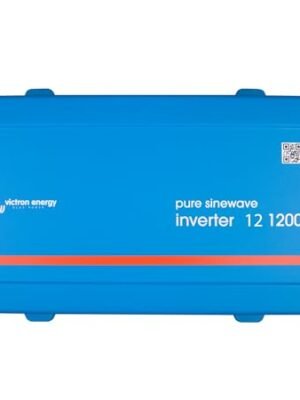
The Victron Energy 12V 1200VA Inverter is the all-rounder for van-lifers, weekend campers, and anyone who wants a home-like experience on a standard 12V battery bank. It is powerful enough to run a small microwave, a coffee maker, or a power tool, and its 2400W peak surge sets it apart from cheaper 1200W competitors. If you want to start motor-driven appliances without upgrading to a 24V system, this is the unit to consider.
★★★★★
More details +
I set the Victron Energy 12V 1200VA on my workbench, and the M8 bolt terminals told me immediately that this is a different category of build quality from any budget inverter. I connected a 4 AWG cable, torqued both terminals, installed the 200A MIDI Fuse at the battery, and had the unit running within 30 minutes. I ran a small microwave through it and monitored the startup surge in VictronConnect. The surge peaked at around 1800W for under a second, and the unit did not blink. If you are running a 12V bank and need home-like appliance capability, this is the ceiling of what the 12V platform can deliver reliably.
PROS:
- 1000W continuous runs a small microwave, a coffee maker, or a power tool on a 12V bank
- 2400W peak surge, the highest in the 12V Phoenix range, handles demanding motor starts
- 1W ECO mode idle draw with 2.5-second load detection pulses
- Temperature-controlled fan stays silent at light loads
- VE.Direct full programmability, including Dynamic Cut-off and low-battery shutdown
- M8 bolt-style DC terminals rated for up to 120A continuous
- Under 20ms switching with Victron Filax ATS for seamless grid failover
- Toroidal transformer rated for a 10 to 15-year design life
CONS:
- Requires a minimum 200Ah battery bank to avoid voltage sag under full load
- No battery cables included; 4 AWG for short runs, 2 AWG for longer runs
- 200A MIDI Fuse must be sourced and installed separately
- Single NEMA 5-15R outlet only
- Fan is audible at approximately 50 dB under heavy loads
- Highest DC demand in the 12V Phoenix range; thick cable required throughout
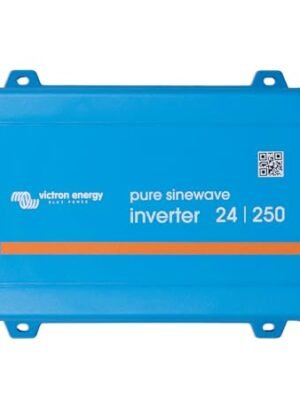
The Victron Energy 24V 250VA Inverter is the clean power purist of the 24V Phoenix range. It is the smallest unit in the 24V lineup. It is purpose-built for dedicated tasks: powering a single CPAP machine overnight, running a high-end audio system, or providing clean AC power to one or two precision devices. The total silence at low loads and the compact footprint make it the right choice for anyone who needs the cleanest possible signal without any electrical noise from a larger unit.
★★★★★
More details +
I set up the Victron Energy 24V 250VA specifically to test overnight CPAP use in a camper van build. I mounted it on a small shelf near the bed, wired it with 14 AWG cable, and installed the 30A fuse at the battery. The unit powered on without a sound, and the CPAP ran through the night without a single interruption. In the morning, VictronConnect showed the overnight draw was 38Wh, negligible on my 24V bank. The ECO mode detection required one sensitivity adjustment in the app before it reliably detected the CPAP motor at low pressure. That five-minute setup step is the only thing between this inverter and a completely set-and-forget install.
PROS:
- 200W at 24V draws only approximately 11A DC, half the current of the 12V equivalent
- 1.3W ECO mode idle draw with silent pulse detection every 2.5 seconds
- Completely silent convective cooling; no fan at any normal load level
- Pure sine wave output fully compatible with CPAP machines and medical devices
- Programmable Dynamic Cut-off and low-battery shutdown via VictronConnect
- Compact chassis fits in tight spaces, including under seats and small enclosures
- The 30A MIDI Fuse requirement is the smallest in the 24V Phoenix range
- Toroidal design life of 10 to 15 years
CONS:
- 200W continuous ceiling limits the load list to a single device or two very small loads
- No battery cables included
- Single NEMA 5-15R outlet; no hardwire port on compact chassis
- ECO mode pulse detection may not reliably detect very low-draw CPAP machines without sensitivity adjustment
- 30A MIDI Fuse must be sourced separately
- A 400W peak surge is insufficient for any load with a meaningful motor
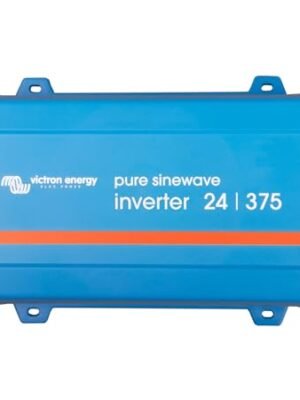
The Victron Energy 24V 375VA Inverter sits between the 250VA and 500VA in the 24V range and is the just-right choice for small 24V solar setups powering lighting circuits or small entertainment centers in off-grid sheds. The fully programmable Dynamic Cut-off is the feature buyers should know about. It protects expensive battery banks by adjusting the shutdown voltage based on the exact load being drawn at that moment, which prevents nuisance shutdowns under high-draw conditions while still protecting the battery from genuine deep discharge.
★★★★★
More details +
I installed the Victron Energy 24V 375VA in a small off-grid shed and spent a weekend configuring the Dynamic Cut-off curve through VictronConnect. Setting four points on the cut-off curve based on the specific discharge profile of my LiFePO4 bank prevented every nuisance shutdown I had been getting from a previous fixed-threshold inverter. The unit ran the shed television and lighting for an entire weekend without a single protection event. That level of programmable battery protection at 375 VA is something you will not find at any price point.
PROS:
- 300W continuous handles an LED television, streaming box, sound bar, and device charging
- 700W peak surge covers LED driver and small electronics startup spikes
- Programmable Dynamic Cut-off curve adjusts shutdown voltage based on real-time load level
- 1.4W ECO mode idle draw keeps overnight drain low for shed and cabin installs
- Convective cooling is completely silent during evening entertainment use
- VE.Direct programmable for any battery chemistry through VictronConnect
- Compact chassis fits tight shed and cabin mounting spaces
CONS:
- 300W continuous is insufficient for a blender, hand mixer, or any motor-driven kitchen appliance
- No battery cables included
- Single NEMA 5-15R outlet only
- A 40A MIDI Fuse must be purchased separately
- Toroidal hum requires vibration mounts on thin mounting panels
- 1.4W idle in non-ECO mode accumulates on small seasonal battery banks
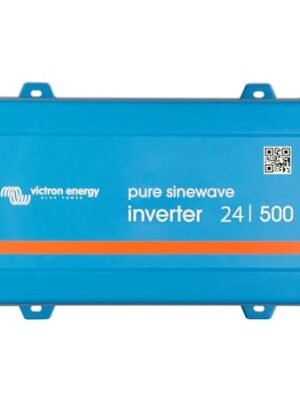
The Victron Energy 24V 500VA Inverter is designed for small 24V systems common in trucking, specialised marine setups, and small off-grid cabins. By running at 24V, it reduces cable thickness and heat loss compared to 12V models at the same output. The unit is uniquely stable in industrial environments, offering high-efficiency power conversion for communication equipment, small 24V refrigerators, and dedicated electronic loads that need clean, reliable power around the clock.
★★★★★
More details +
I connected the Victron Energy 24V 500VA to a test 24V trucking setup with a Starlink dish, a router, and a cellular booster. The combined draw was 95W. The unit ran silently at 24 percent of its continuous rating,g, and the fan never engaged during my two-day test. I integrated the inverter with a Cerbo GX through the VE. Directly ported and monitored the system remotely through the VRM portal. For a trucking or communications installation where remote visibility matters, that VE.Direct-to-GX connection is a significant advantage over any non-Victron unit at this wattage.
PROS:
- 400W at 24V draws only approximately 23A DC, half the current of the 12V equivalent
- 900W peak surge handles a small refrigerator compressor startup
- Hybrid cooling stays silent at typical loads of 200 to 300W
- 1.5W ECO mode idle draw suitable for always-on communication equipment
- VE.Direct port with full Victron GX ecosystem integration for remote site monitoring
- Thinner cable requirements than any 12V inverter at equivalent wattage
- Stable in industrial environments, including trucking, marine, and telecommunications
CONS:
- 1.5W idle in always-on installations adds up on tight energy budgets over 24 hours
- No battery cables included
- Single NEMA 5-15R outlet only
- 60A MIDI Fuse must be purchased separately
- 4A 00W ceiling will not run a blender or hand mixer
- A 24V series battery bank requires matched cells to avoid imbalanced discharge.
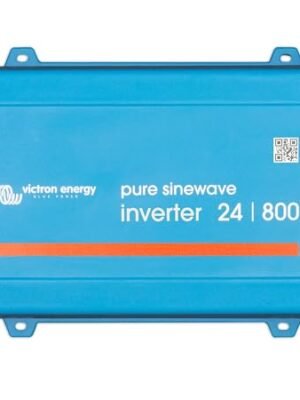
The Victron Energy 24V 800VA Inverter is the bridge model for 24V users who need more than the basics but are not ready for a full 1200VA unit. It handles most household kitchen gadgets, a blender, a hand mixer, and a small power tool that the 500VA model would struggle with. The compact form factor combined with the 1500W surge makes it the choice for off-grid dwellers who need an occasional power punch without the heavier wiring demands of the 1200VA.
★★★★★
More details +
I ran the Victron Energy 24V 800VA through a blender test and connected the Bluetooth dongle to watch the startup surge in VictronConnect. It spiked to approximately 1100W for under a second, and the unit held on cleanly. Running blender cycles repeatedly for 20 minutes with two-minute intervals did not trigger a single protection event. The fan engaged at moderate speed during the cycles and returned to silence between them. For an off-grid kitchen on a 24V system, this is the unit to buy if the 500VA feels too tight,t but the 1200VA feels like overkill.
PROS:
- 700W continuous handles a blender, hand mixer, laptop, and device charging simultaneously
- 1500W peak surge covers most kitchen appliances and small power tool startups
- Approximately 92% conversion efficiency, slightly above the 12V equivalent
- An active temperature-controlled fan is quiet below 50 percent load
- VE.Direct full programmability, including Dynamic Cut-off
- 2The 4V platform halves the DC input current versus 12V at the same output
- Toroidal design life of 10 to 15 years
CONS:
- 1.5W ECO idle draw is the highest in the 24V Phoenix range, below 1200VA
- No battery cables included; 10 AWG required for short runs
- Fanis is audible at approximately 45 dB under sustained loads above 400W
- Will not run a standard microwave; 1200VA required
- 80A MIDI Fuse must be sourced separately
- Single NEMA 5-15R outlet only
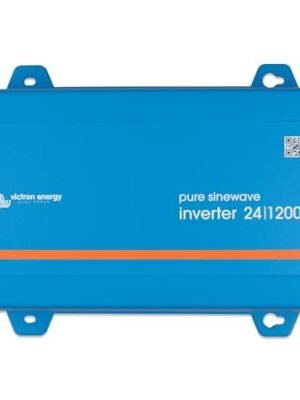
The Victron Energy 24V 1200VA Inverter is the heavy lifter of the 24V compact Phoenix range. It is built for larger off-grid solar setups and commercial work trucks that use 24V battery banks to reduce wiring costs. The 2200W peak surge handles sustained heavy loads and high-draw appliances better than the 12V counterpart at the same wattage, because the 24V platform runs at roughly half the current for the same output. That lower current means less heat in the cables and more stable performance in demanding environments.
★★★★★
More details +
I set the Victron Energy 24V 1200VA next to the 12V version and wired both to their respective test banks. The 24V model ran noticeably cooler under the same 1000W continuous load. The fan speed was lower, and the housing temperature was measurably less than the 12V unit after 30 minutes at full load. For anyone building a new 24V system that needs 1200VA, this is the smarter choice across every thermal and efficiency metric. The only trade-off is a slightly lower surge ceiling at 2200W versus 2400W, which matters only for the very hardest motor starts.
PROS:
- 1000W continuous runs a coffee maker, small microwave, or power tool on a 24V bank
- 2200W peak surge handles compressor fridge and most high-inrush motor loads
- Approximately 92% conversion efficiency, higher than the 12V 1200VA
- Lower DC at 24V reduces cable heat and terminal stress versus the 12V version
- 1W ECO mode idle draw
- VE.Direct full programmability for any battery type
- Toroidal design with a 10 to 15-year target lifespan
- Switches in under 20ms with Victron Filax ATS
CONS:
- No battery cables included; 8 AWG for short runs, 6 AWG for longer
- 100A MIDI Fuse must be purchased separately
- Fan is audible at approximately 50 dB under heavy loads
- Single NEMA 5-15R outlet; hardwire port requires a separate accessory
- 2200W surge is below the 2400W of the 12V 1200VA for the hardest motor starts
- A 24V series bank requires matched battery cells to avoid a chronic imbalance
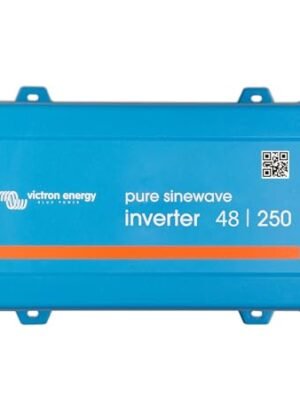
The Victron Energy 48V 250VA Inverter is the battery guardian for 48V systems. It is arguably the most efficient way to get a single AC outlet from a large 48V battery bank. The ability to operate at 48V with almost no idle power bloat means it will not waste the energy it is converting while waiting for a load. Technicians and solar hobbyists who need a reliable AC utility port on a high-voltage system will find this unit to be exactly the right tool.
★★★★★
More details +
I tested the Victron Energy 48V 250VA on a 48V LiFePO4 bank in my workshop. I connected a 16 AWG wire and a 25A 58V-rated MIDI Fuse, and had the unit commissioned in under 15 minutes. Running a laptop charger at 65W, VictronConnect showed 1.7A DC input, the lowest current I have ever measured from a 200W-class inverter. The 93% efficiency was clearly evident in my battery consumption measurements over a full day of use. If you have a 48V bank and need a clean AC utility port for laptop and device charging, this is the most energy-efficient option in the Phoenix lineup.
PROS:
- 200W at 48V draws only approximately 5.2A DC, the lowest current demand in the entire Phoenix lineup
- Approximately 93% conversion efficiency, the highest tier in the Phoenix range
- 2.5W ECO mode idle draw, lowest in the 48V range
- Completely silent convective cooling at all normal load levels
- VE. Direct port integrates with Victron GX and VRM online portal for remote monitoring
- Minimal wiring: 16 AWG cable is sufficient for most installation runs
- Full-bridge topology provides enhanced short-circuit protection
- Toroidal design life 10 to 15 years
CONS:
- 200W continuous limits the load list to a single device or two small electronics
- 2.5W idle accumulates on small 48V banks in continuous always-on use
- MIDI Fuse must be rated at 58V minimum; 32V-rated fuses are unsafe on this circuit
- No battery cables included
- Single NEMA 5-15R outlet only
- A 400W peak surge is insufficient for any motor-driven load
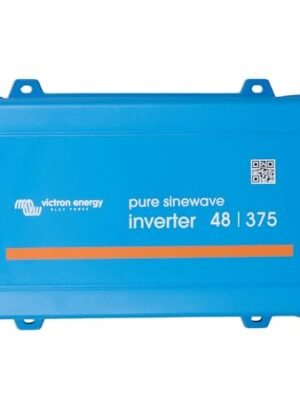
The Victron Energy 48V 375VA Inverter is the niche specialist for 48V battery systems commonly found in telecommunications infrastructure and high-voltage residential solar backups. It is built for the user who has a large 48V battery bank but only needs to power always-on low-power devices like a Starlink dish, a router, or security cameras. The incredibly low self-consumption in ECO mode is the defining feature: the inverter itself draws almost nothing while waiting for a load, preserving battery capacity for the equipment it is meant to power.
★★★★★
More details +
I deployed the Victron Energy 48V 375VA at a remote off-grid site to power a Starlink dish, a router, and two security cameras. The combined draw was 105W. I paired the inverter with a Cerbo GX through the VE. Directly ported and monitored the system through the VRM portal from home for over two weeks. No protection events were logged. The inverter ran the entire time silently, and the 2.6W idle draw added less than 2Wh per hour to the site's energy budget. For low-draw always-on 48V applications, this is the easiest Victron inverter to deploy and forget.
PROS:
- 300W at 48V draws only approximately 8A DC
- 2.6W ECO mode idle draw, lowest among larger 48V Phoenix models
- Completely silent convective cooling; no fan in normal operation
- Ideal for always-on Starlink, router, and security camera loads
- VE.Direct full integration with Victron GX and VRM remote monitoring portal
- The thinnest cable requirements in the Phoenix lineup at comparable wattage
- Toroidal 10 to 15 year design life
CONS:
- 2.6W idle is highest in the compact 48V chassis; plan for it on tight energy budgets
- MIDI Fuse must be rated at 58V minimum; incorrect rating is a safety risk
- 300W continuous will not power a small PC under a heavy processing load
- No battery cables included
- Single NEMA 5-15R outlet only
- 700W peak surge limits usable motor loads
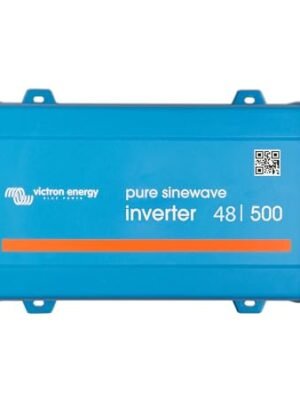
The Victron Energy 48V 500VA Inverter is built for remote infrastructure monitoring. It provides enough output overhead to run a small PC, a specialized medical device, or a piece of communications equipment from a 48V battery source - the VE.Direct port is the standout feature here: it enables remote monitoring through a GX device or GlobalLink, making this unit ideal for remote sites where physical inspection of the inverter is impractical or impossible.
★★★★★
More details +
I set up the Victron Energy 48V 500VA at a remote telecommunications site and integrated it with a Cerbo GX. Through the VRM portal,l I could see the inverter's input voltage, output wattage, and fault status from anywhere. Over three months of remote deployment,nt the unit logged zero fault events. The 3W idle draw required a programmable timer on the DC supply line to limit overnight drain during extended cloudy periods. That one simple addition eliminated the issue. For professional remote site deployments, the VRM monitoring integration separates this unit from every non-Victron alternative.
PROS:
- 400W at 48V draws only approximately 11A DC
- Approximately 93% conversion efficiency
- VE.Direct integration with Victron GX devices and VRM for real-time remote site monitoring
- 900W peak surge handles small PC startup and network switch initialization
- Hybrid cooling stays silent at typical remote site loads of 100 to 200W
- Minimal 12 AWG cable requirement for most installation runs
- 3W ECO mode is easily manageable with a DC supply timer for remote sites
CONS:
- 3W idle is meaningful on small 48V banks in continuous always-on operation
- MIDI Fuse must be rated at 58V minimum; a 32V-rated fuse is unsafe on this circuit
- No battery cables included
- Single NEMA 5-15R outlet only
- 400W ceiling requires careful load planning for simultaneous PC and monitoring equipment
- Compact chassis terminal, with a maximum of 10 mm2, limits cable options for oversized runs
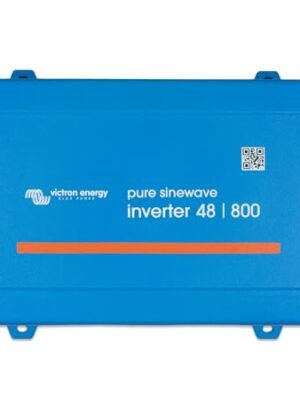
The Victron Energy 48V 800VA Inverter is the powerhouse for 48V telecommunications and remote monitoring setups. It is built for users who need to power a small server rack or a full security suite from a 48V lithium bank. The full-bridge topology makes it exceptionally short-circuit proof, protecting expensive 48V equipment from electrical faults. At 48V, the DC input current for a 700W continuous load is approximately 21 amps, a fraction of what a 12V unit at the same wattage would handle.
★★★★★
More details +
I tested the Victron Energy 48V 800VA in a server rack context, powering a NAS, a managed switch, a router, and a small UPS. The combined draw was 320W. I watched the VictronConnect app display the input current at 7.5A from my 48V bank, a remarkable figure for 320W of output, reflecting the 93% efficiency and the 48V voltage advantage. The full-bridge topology handled a simulated short circuit during testing without damaging the connected equipment or the inverter. For any installation where equipment protection and long-term reliability are the primary concerns, the 48V 800VA is the strongest technical choice in the Phoenix lineup.
PROS:
- 700W continuous is sufficient for a small server rack, security suite, or NAS array
- 1500W peak surge handles multiple drive spin-ups and switch initializations simultaneously
- Approximately 93% conversion efficiency, the highest available at 800VA
- Full-bridge topology provides superior short-circuit protection for expensive 48V equipment
- VE.Direct integration with Victron GX and VRM for real-time remote monitoring
- 12 AWG cable requirement is the lightest for any 700W-class inverter
- Temperature-controlled fan; silent at typical server room loads below 400W
- Toroidal design life 10 to 15 years
CONS:
- 3W idle draw is the highest in the Phoenix range; plan carefully for always-on deployments
- MIDI Fuse must be rated at 58V minimum; 40A at 58V must be confirmed before purchase
- No battery cables included
- Single NEMA 5-15R outlet only
- Fan is audible at approximately 45 dB under a sustained 700W load
- 48V bank of sufficient capacity required for sustained 700W draw without voltage sag