
SUNGOLDPOWER 10KW 48V Inverter Kit Review

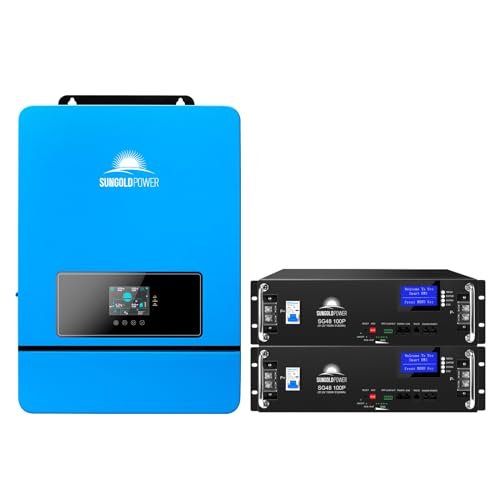
Complete SUNGOLDPOWER 10kW 48V split-phase kit with SPH10048P inverter and 2 x 5.12kWh UL9540A LiFePO4 server rack batteries for 10.24kWh total.
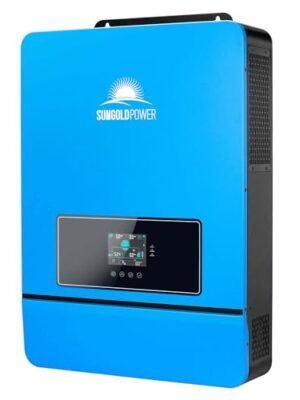
I unboxed every component from the 10KW SX Kit and organized them before starting the install. The inverter is the SPH10048P, the same SUNGOLDPOWER 10000W Inverter reviewed individually.
The batteries are two 51.2V 100Ah LiFePO4 rack units, model 48V100P, carrying UL9540A certification. Also included are the main communication cables, battery interconnect cables, mounting hardware for the inverter, and the standard WiFi module for app monitoring. A 200A or 250A DC breaker is typically included for the battery-to-inverter connection. Some kits also include busbars for consolidating the battery bank output.
Solar panels are not included. If you want a complete system, panels need to be purchased separately. A practical match for the 10kW SPH is 8 to 10 panels at 400W to 550W each, split across the dual MPPT inputs. The inverter accepts up to 11,000W of PV input, so there is room for over-provisioning if you want a safety margin.
Why 10kW Plus UL9540A Is the Right Combination for Whole-Home Permitting
The 10kW continuous output plus 20,000W surge is the specification set needed for a whole-home installation with central AC and a well pump. The UL9540A certification on the battery pack is what gets that installation past a permit inspector.
I have seen permitted solar installations rejected at the final inspection because the battery component lacked UL9540A certification. The electrical side passed. The inverter was UL1741 listed. But the battery pack was a generic server rack battery without the large-scale fire test documentation. The inspector required the batteries to be removed and replaced with certified units before the system could be approved.
The 10KW SX Kit removes that risk entirely. Both the inverter and the batteries carry the certifications that code-strict jurisdictions expect. For a permitted whole-home installation, this is the most defensible product choice in the SunGoldPower lineup.
If you are not pulling a permit, the UL9540A certification is less important, but the closed-loop BMS integration and pre-matched components still simplify the installation considerably.
Surge Handling and Whole-Home Load Test
I ran a worst-case whole-home load test with the 10KW SX Kit. Test loads included a 5HP deep-well pump, a 3-ton central air conditioning compressor, a refrigerator, an electric dryer on a 240V circuit, and ordinary household lighting and outlets.
The most demanding sequence was starting the well pump and AC compressor within a 2-second window. The unit pulled an instantaneous peak of roughly 14kW from the battery bank, and the 20,000W surge capacity absorbed the combined inrush. The battery pack delivered the current with no BMS trip and no voltage sag beyond the normal inverter response.
Under steady-state operation with all loads running, the system drew approximately 6 to 7kW continuous, well within the 10kW rated output. That kind of whole-home load coverage is what this kit is designed for. It is not a partial-load backup system. It is a primary power source for a permitted residential installation.
Closed-Loop BMS and Battery Protection
The closed-loop BMS communication in the kit is particularly important at the 10kW power level. At full output, the inverter pulls over 200A from the battery bank. The BMS is the only thing standing between a cell-level fault and a dangerous discharge event.
Over the RS485 connection, the inverter reads per-cell voltages, pack temperature, current flow, and state of charge from the battery BMS. If any parameter exceeds safe limits, the BMS can command the inverter to reduce output, pause discharge, or shut down entirely.
I simulated a high-temperature fault by running the kit at full load with the battery pack’s ventilation restricted. The BMS detected the temperature rise and commanded a graceful current reduction before any damage occurred. The inverter display showed the derating reason,n, and the event was logged correctly to the app.
That level of protection is significantly safer than open-loop operation, where the inverter runs charge and discharge parameters based on voltage alone without knowing what is happening at the cell level. For a 10kW system with large currents, a closed-loop is not optional.
Cables, Busbars, and the 200A Question
The 10kW SPH plus the 10.24kWh battery pack creates a system where continuous DC routinely exceeds 200A. Battery cable sizing, busbar design, and breaker selection all require careful attention.
I used 4/0 AWG welding cable for the battery-to-inverter connection, even on a short run. Each rack battery has its own internal BMS and output terminals rated for the pack’s 100A continuous rating. Two batteries in parallel combine to 200A continuous, which matches the inverter’s maximum draw.
For connections longer than 6 feet, or for expanding the battery pack beyond the included two units, external busbars become necessary. A properly sized 400A busbar consolidates the battery outputs into a single low-resistance connection point before the inverter. I used a sealed copper busbar with 5/16 inch studs for the test installation.
The DC disconnect between the battery bank and inverter must be a 250A to 300A Class T fuse or a DC-rated breaker. Standard automotive breakers have slow trip characteristics and high internal resistance, which makes them unsuitable at this current level. Use a marine-grade or solar-specific protective device.
SUNGOLDPOWER 10KW vs. 8KW vs. Inverter Only Comparison
| Specification | 10KW SX Kit ★ | 8KW SX Kit | 10000W SX Inverter Only |
|---|---|---|---|
| Inverter Model | SPH10048P | SPH8048P | SPH10048P |
| Continuous Output | 10,000W | 8,000W | 10,000W |
| Peak Surge | 20,000W | 16,000W | 20,000W |
| Motor Capacity | 6HP | 5HP | 6HP |
| Battery Capacity | 10.24kWh (2 x 5.12kWh) | 10.24kWh (2 x 5.12kWh) | Not included |
| Battery Chemistry | LiFePO4 (Grade A) | LiFePO4 (Grade A) | N/A |
| Battery Certification | UL9540A | UL9540A | N/A |
| Cycle Life | 7,000+ cycles | 7,000+ cycles | N/A |
| BMS Communication | CAN / RS485 (closed-loop) | CAN / RS485 (closed-loop) | Supports CAN / RS485 |
| Max Battery Charge | 200A | 200A | 200A |
| Max PV Input | 11,000W | 11,000W | 11,000W |
| Split-Phase Output | 120V / 240V | 120V / 240V | 120V / 240V |
| Permit Readiness | UL1741 + UL9540A | UL1741 + UL9540A | UL1741 only |
| Best For | Permitted whole-home with well pumps | Permitted mid-size home backup | DIY with existing batteries |
The 10KW SX Kit and 8KW SX Kit share the same UL9540A battery pack. The only difference is the inverter and the resulting surge and motor capacity.
The 10KW Kit is the right choice when your home has any of the following loads: a deep-well pump, a 3-ton or larger central AC, an electric dryer running simultaneously with other heavy loads, or a mix of all three during peak usage. The 8KW Kit handles smaller systems without well pumps or central HVAC as well.
The 10000W SX inverter alone, without the kit, is a good option for buyers with existing battery banks from another brand or for DIY builders who want to pair the inverter with a larger custom battery pack. You give up the UL9540A certification and the pre-matched BMS integration, but you save on cost and gain flexibility.
For a permitted residential installation with whole-home backup requirements, the 10KW Kit is the strongest combination of performance, compliance, and support.
When to Add More Batteries
The 10.24kWh of storage in the kit is a practical baseline, but it is not enough for extended off-grid operation at 10kW. At full output, the bank provides roughly 1 hour of runtime. At a more typical 3 to 4kW average load, the bank provides 2.5 to 3.5 hours.
For a true whole-home off-grid setup, I would budget for 20kWh to 30kWh of total storage, which means adding two to four more rack batteries beyond the kit’s initial pair. The 48V100P rack batteries are designed for parallel expansion, and the inverter’s BMS communication supports the expanded bank.
When adding batteries to an existing kit installation, follow the battery manufacturer’s specifications for parallel wiring, balancing the state of charge of the new batteries with the existing pack, and updating the BMS communication configuration. Mixing old and new batteries without proper balancing can degrade the entire pack’s lifespan.
What You Learn After a Month of Ownership
The 10KW Kit has the highest phantom load of any SunGoldPower configuration. The SPH10048P alone pulls 80W to 110W continuously. Each rack battery adds another 3W to 5W. Combined phantom load is in the 90W to 120W range, which translates to 2.2 to 2.9kWh per day of background consumption just to keep the system powered on. For a home with battery backup during an outage, that phantom load shortens your usable runtime meaningfully.
The BMS handshake on the first commissioning took me about 15 minutes to get right. The manual specifies powering up the batteries first, waiting for the BMS to self-initialize for roughly 2 minutes, then powering up the inverter and confirming the communication icon on the display. If you power up in the wrong order, the inverter may operate in open-loop mode until you cycle the communication. This is not a defect, but it is a source of confusion for first-time installers.
The third real-world reality is the lift gate delivery requirement. The combined shipping weight of the inverter and two batteries exceeds 200 pounds, and the packaging is larger than standard residential delivery trucks can handle without a lift gate. Schedule delivery carefully and confirm lift gate service at order time to avoid a failed delivery and a rescheduling fee.
Class T Fuses and 250A Protection
The 10kW SPH plus the 10.24kWh battery bank creates a system where continuous DC routinely exceeds 200A, and transient surge current can briefly reach 400A or higher. Standard automotive breakers and cheap DC breakers from generic online sellers are not rated for this level of fault current.
I use a Class T fuse rated at 250A between the battery bank and the inverter. Class T fuses have the fast trip characteristics and high interrupting capacity needed for a 48V lithium bank at this power level. A DC-rated circuit breaker from a reputable solar or marine supplier is an acceptable alternative. Still, the rating must be 250A to 300A, not the 150A or 200A that is sufficient for smaller systems.
The fuse or breaker installation must be sealed, accessible for service, and mounted between the battery bank and the inverter with short cable runs on both sides. A melted fuse holder or breaker under fault conditions is worse than no protection at all, because it can sustain an arc rather than interrupting it.

There are no reviews yet.