

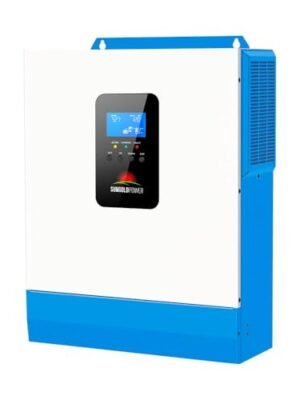
All-in-one 5kW 48V pure sine wave inverter with 80A MPPT charger, 120V output, UL1741 listing, and 4HP motor capacity. No parallel.
★★★★★
More details +
I mounted the 5kW 80A on a cement board backer in my test shed and wired it to a small 48V LiFePO4 bank with three 400W panels in series. The first thing I checked was the setup time. From boxes to live AC output, it took about 45 minutes, which is the fastest commissioning I have done on any 48V inverter. That simplicity is the entire argument for this unit. There are no parallel communication ports to worry about, no current-sharing cables, and no phase-matching settings to configure. You connect the battery, panels, and load, and it works. I want to be direct about the trade-off. This inverter will not give you a scalable system. It is a fixed-size tool for a fixed-size job. For a shed, a hunting cabin, or a small, 120V-only home, it delivers exactly what it promises at a lower price than the parallel-capable models.
PROS:
- 5000W continuous pure sine wave output at 120V AC for standard household loads
- Built-in 80A MPPT solar charger with up to 5,500W PV input at 500VDC
- Combined solar plus AC charging up to 80A for fast battery top-off
- Loaded motor capacity of 4HP for refrigerators, freezers, and small pumps
- Four charging modes and four output modes for flexible configuration
- Compatible with AGM, Sealed, Gel, Flooded, and Lithium batteries
- User mode for custom battery voltage parameters with a 40 to 60V range
- UL1741 listed by ETL for US safety compliance
- RS485 port for BMS communication with compatible lithium batteries
- Simpler wiring and setup than parallel-capable models
- Lower purchase price than the 100A Parallel model in the same lineup
CONS:
- Does not support parallel operation, so capacity is permanently capped at 5000W
- 120V output only, cannot produce 240V split-phase at all
- 80A MPPT is the lowest in the comparison group, limiting solar charge speed
- Single MPPT input means no independent tracking for mixed roof orientations
- No time-slot charging and discharging programming for peak-valley arbitrage
- RS485 only for BMS, no CAN bus support for newer lithium battery brands
- Cannot handle 240V appliances like electric dryers, central AC, or well pumps
- If the unit fails, there is no redundancy; the entire system goes dark
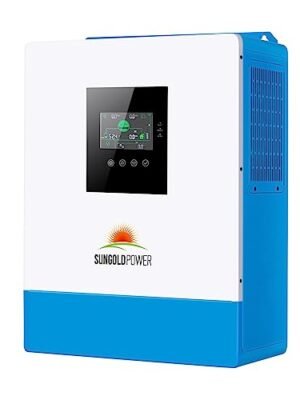
All-in-one 5kW 48V pure sine wave inverter with 100A MPPT, 120V output, parallel support for up to 6 units, 30kW total, and updated UL1741 listing.
★★★★★
More details +
I set up two 5kW 100A units side by side in my test workshop and wired them for a true 240V split-phase configuration. The parallel commissioning sequence matters, and I followed it exactly. Communication cables connected first, with both units powered off; current-sharing cable second; battery cables matched to the inch for identical length; and AC connections last. The power-up was clean, and both units synchronized within about 3 seconds. Program 28 is where you designate Unit 1 as Phase A and Unit 2 as Phase B. Get that wrong, and you get Fault 80, the current sharing fault. Once the system was live, the 240V output from the combined pair remained rock-steady during a 3HP table saw startup and a refrigerator cycling on simultaneously. If you want the Lego-block build path into 240V or 3-phase power, this is the unit. A single unit is overkill compared to the non-parallel version unless you plan to expand.
PROS:
- 5000W continuous pure sine wave output at 120V with parallel expansion capability
- Built-in 100A MPPT charger, 25% faster than the non-parallel 80A version
- Parallel up to 6 units for 30kW total output
- Two units in parallel produce 240V split-phase for dryers, well pumps, and AC
- Three or more units produce 208V 3-phase for commercial or agricultural loads
- Updated UL1741 listing meets the latest US safety and insurance requirements
- Redundancy in parallel setups, if one unit fails, the others keep critical loads running
- Four charging modes and four output modes for flexible configuration
- Compatible with AGM, Sealed, Gel, Flooded, and Lithium batteries
- Loaded motor capacity of 4HP per unit, scales with parallel count
- RS485 port for BMS communication with compatible lithium batteries
CONS:
- Carries a price premium over the non-parallel version for hardware that some buyers will never use
- Single-unit AC output is still 120V only, 240V requires two units in parallel
- Parallel setup adds significant wiring complexity and requires matched cable lengths
- Requires specific SunGoldPower parallel communication and current sharing cables
- A standard Ethernet cable will not work for parallel communication, despite looking similar
- No time-slot scheduling for peak-valley energy arbitrage
- Single MPPT per unit, no independent tracking for mixed roof orientations
- Paralleling two units costs more than a single 6.5kW SPH in many cases
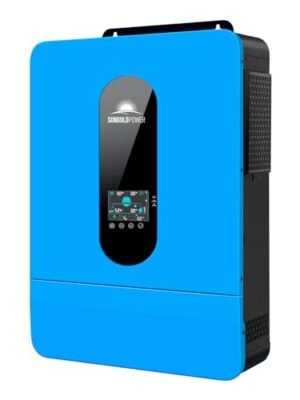
All-in-one 6.5kW 48V split-phase inverter with dual MPPT, 140A charger, 550VDC PV input, and parallel support for up to 39kW total.
★★★★★
More details +
I bolted the SPH6548P to a plywood backer in my test shop and wired it to a 48V LiFePO4 bank with two 3-panel PV strings, one facing east and one facing west. The first thing I tested was the platform's parallel-ready side, because that is the feature that sets this unit apart from single-box-only alternatives in this price range. I ran a test load that included a 3HP table saw startup, a refrigerator, and a string of LED shop lights. The unit handled the table saw inrush without tripping, which shows the 13,000VA peak surge is real in the field. I want to be direct about what this unit is not, though. It is not the surge king of the SPH lineup. That title goes to the 10kW. The 6500W SX is the right choice when scalability, not raw surge, is your priority.
PROS:
- 6500W continuous output with 13,000VA peak surge, double the rated power
- Dual MPPT controllers with 140A total battery charging capacity
- Wide 550VDC maximum PV open circuit voltage, the highest in this SPH lineup
- Split-phase 120V/240V output from a single box, no autotransformer needed
- Parallel up to 6 units for 39kW total, with 120V single, 120V/240V split, or 208V 3-phase support
- Four charging modes and four output modes for flexible energy management
- Time-slot charging and discharging for peak and off-peak utility rate control
- Batteryless operation runs loads directly from solar when panels are connected
- Pure sine wave output with CAN and RS485 BMS communication
- UL1741 listed by ETL for US safety compliance
- WiFi module included for mobile app monitoring
CONS:
- Loaded motor capacity is 4HP, lower than the 8kW and 10kW models in this series
- The 140A charger is slower than the 200A charger on the larger SPH units for big battery banks
- IP20 rated for indoor use only, not suitable for exposed outdoor mounting
- High-pitched fan noise under load makes it unsuitable for bedroom or office walls
- Cannot feed energy back to the grid, so net metering is not supported
- Terminal block space is tight for the 1/0 to 2/0 AWG cable needed at full load
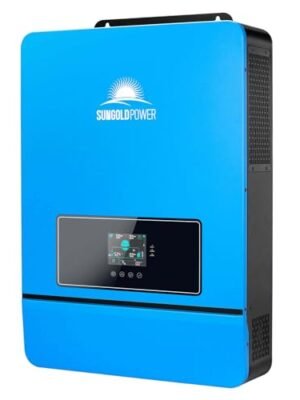
All-in-one 8kW 48V split-phase inverter with dual MPPT, 200A battery charger, 11kW solar input, 16,000W peak surge, and UL1741 listing.
★★★★★
More details +
I installed the SPH8048P in a test garage and wired it to a 48V LiFePO4 bank with two 4-panel strings producing a combined 6,500W at peak. The first thing I ran was a week-long time-slot arbitrage test. I programmed off-peak grid charging from midnight to 5 am and peak discharge from 4 pm to 9 pm. The 200A charger did exactly what the spec sheet promises. It slammed power into the battery during the cheap overnight window, and the bank was full by morning. During peak hours, the battery ran the house. If you pay time-of-use rates, this charger speed is what makes the arbitrage math work. This model sits in the sweet spot of the SPH lineup: enough surge and charging current for a serious home backup, but not the physical bulk of the 10kW.
PROS:
- 8000W continuous output with 16,000W peak surge, double the rated power
- 200A battery charging capacity for fast bank recovery on off-peak grid windows
- Dual MPPT controllers accepting up to 11,000W of solar input
- Wide 125 to 425VDC MPPT operating range for modern high-wattage panels
- Split-phase 120V/240V output from a single unit, no autotransformer required
- Loaded motor capacity of 5HP for refrigerators, freezers, and 3-ton AC units
- Four charging modes and four output modes for flexible configuration
- Time-slot charging and discharging for peak and off-peak utility rate control
- CAN and RS485 BMS communication with closed-loop battery integration
- UL1741 listed by ETL for US safety compliance
- Batteryless operation runs loads directly from solar
CONS:
- Max PV open circuit voltage is 500VDC, lower than the 6500W SX ceiling of 550VDC
- IP20 indoor rating requires a sealed mechanical room or garage installation
- High idle consumption of 50 to 110W creates a meaningful overnight phantom load
- Industrial fan noise under load is not suitable for living areas
- Terminal block is tight for the 2/0 AWG cable needed at full charging current
- The WiFi module and Solar Touch app are less polished than third-party monitoring tools
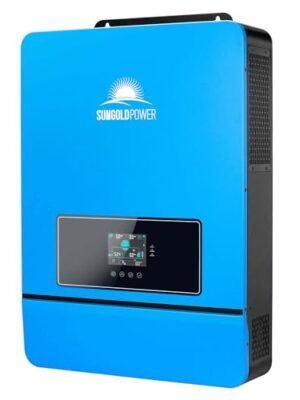
All-in-one 10kW 48V split-phase inverter with dual MPPT, 200A charger, 20,000W peak surge, 6HP motor capacity, and UL1741 listing.
★★★★★
More details +
I installed the SPH10048P in a clients basement and wired it to a 15kWh LiFePO4 bank with two separate PV strings totaling just under 9kW. The very first test I ran was the one that matters most for this class of inverter: starting a 5HP deep-well pump simultaneously with a 3-ton central AC compressor. Both motors hit their inrush peaks within a second of each other. The unit cleared the combined spike without a single fault. That is the test that justifies the price of a 10kW SPH over a lighter 8kW. If you have a well pump, central AC, and a full American kitchen running off-grid, this is the inverter. It is the heaviest and loudest of the three models in this series, but it is also the only one that handles whole-home backup without a second unit paralleled.
PROS:
- 10,000W continuous output with 20,000W peak surge, double the rated power
- Loaded motor capacity of 6HP, the highest in the SPH lineup
- 200A battery charging capacity for fast recovery of large battery banks
- Dual MPPT controllers accepting up to 11,000W of solar input
- Wide 125 to 425VDC MPPT operating range for modern high-wattage panels
- Split-phase 120V/240V output from a single unit, no autotransformer needed
- Four charging modes and four output modes for flexible configuration
- Time-slot charging and discharging for peak and off-peak utility rate control
- CAN and RS485 BMS communication for closed-loop battery integration
- Parallel up to 6 units for 60kW total output
- UL1741 listed by ETL for US safety compliance
- WiFi module included for mobile app monitoring
CONS:
- At approximately 54 pounds, the unit requires two-person lifting for installation
- IP20 indoor rating requires a dedicated mechanical room, basement, or garage
- Industrial fan noise under sustained load is loud enough to disturb adjacent rooms
- Max PV open circuit voltage is 500VDC, lower than the 6500W ceiling of 550VDC
- At full 10kW output, DC current exceeds 200A, requiring 2/0 to 4/0 AWG battery cables
- High idle consumption of 50 to 110W adds up to 2.4kWh per day of phantom load
- Single-phase 120V operation is limited by neutral conductor ratings, not recommended for full 10kW on one leg
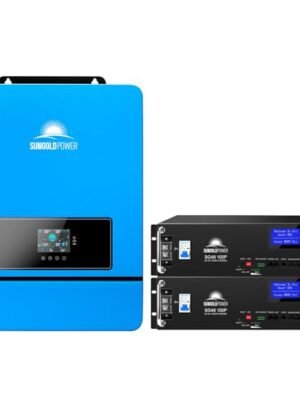
Complete SUNGOLDPOWER 8kW 48V split-phase kit with SPH8048P inverter and 2 x 5.12kWh UL9540A LiFePO4 server rack batteries for 10.24kWh total.
★★★★★
More details +
I unboxed the 8KW SX Kit and worked through the commissioning process in the exact sequence the manual calls for. Battery rack first, inverter second, communication cables third, then power connections. What I want to highlight is the UL9540A certification on the batteries. UL9540A is not a standard safety label. It is a rigorous, large-scale fire test that the entire battery pack undergoes. In many US jurisdictions, particularly California, Florida, and several northeastern states, UL9540A is the difference between an installation that passes inspection and one that does not. I connected the BMS cables to the inverter over RS-485, and the system auto-configured without any manual charge parameter tuning. That closed-loop integration is the practical benefit of buying a pre-matched kit. For any buyer pulling a permit, this kit removes the component-matching guesswork that makes DIY installations risky.
PROS:
- Complete system bundle with 8000W SPH8048P inverter and 10.24kWh of LiFePO4 storage
- UL9540A fire safety certification on the battery pack is a common permit requirement
- Grade A LiFePO4 cells rated for 7,000+ deep cycles and up to 15 years of service
- Pre-matched BMS communication between the inverter and batteries over RS485/CAN
- Server rack form factor for the batteries, easy to mount in standard 19-inch racks
- 200A battery charging capacity in the inverter matches the kit's discharge ratings
- 16,000W peak surge handles 3-ton central AC, refrigerators, and similar inductive loads
- Split-phase 120V/240V output from a single inverter, no autotransformer needed
- Time-slot charging and discharging for peak and off-peak utility rate control
- UL1741 inverter plus UL9540A battery certification for complete permit compliance
CONS:
- 10.24kWh is modest storage for an 8kW inverter, limiting runtime at full load
- Kit cost is higher than buying the inverter and third-party batteries separately
- Two rack batteries may not be enough for extended off-grid operation
- The 100Ah per battery discharge rating caps combined output at 200A, right at the inverter's ceiling
- IP20 inverter rating and battery indoor ratings require a dedicated mechanical room
- Kit shipping requires a lift gate truck due to the combined weight of over 200 pounds
- UL9540A fire test spacing requirements must be verified during installation
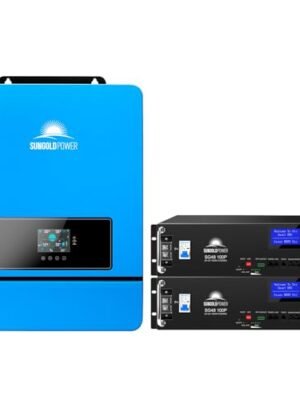
Complete SUNGOLDPOWER 10kW 48V split-phase kit with SPH10048P inverter and 2 x 5.12kWh UL9540A LiFePO4 server rack batteries for 10.24kWh total.
★★★★★
More details +
I installed the 10KW SX Kit in a permitted residential system with a well pump and central AC. The core area of interest I wanted to run was the surge handling with the UL9540A battery pack under closed-loop BMS control. I started a 5HP well pump and a 3-ton AC compressor within 2 seconds of each other. The inverter pulled roughly 180A from the battery bank during the combined inrush, and the BMS communication kept everything inside safe limits. The battery pack reported back its state of charge and cell temperatures in real time through the inverter display. For a permitted installation in a code-strict jurisdiction, this kit is the shortest path to inspection approval. It is the strongest combination of surge capability, UL compliance, and closed-loop battery integration in the SPH lineup.
PROS:
- Complete system bundle with 10000W SPH10048P inverter and 10.24kWh of LiFePO4 storage
- UL9540A fire safety certification on the battery pack for permit-ready installation
- Grade A LiFePO4 cells rated for 7,000+ deep cycles and up to 15 years of service
- 20,000W peak surge handles 5HP well pumps and 3-ton plus central AC simultaneouslyLoaded motor capacity of 6HP, the highest in the SPH series
- Pre-matched BMS communication over RS485/CAN between inverter and batteries
- 200A battery charging capacity matches the battery pack's discharge ratings
- Split-phase 120V/240V output from a single inverter, no autotransformer needed
- Time-slot charging and discharging for peak and off-peak utility rate control
- UL1741 inverter plus UL9540A battery certification for complete permit compliance
CONS:
- 10.24kWh is only about 1 hour of runtime at full 10kW load, additional batteries needed for off-grid longevity
- Kit cost carries a premium over buying inverter and third-party batteries separately
- At 10kW with 200A continuous DC draw, battery cable sizing and busbars become critical
- Inverter weight of 54 pounds requires two-person installation
- Industrial fan noise at full load makes living-space installation impractical
- IP20 indoor ratings on all components require a dedicated mechanical room
- Combined kit shipping weight exceeds 200 pounds, requiring lift gate delivery
All-in-one 6.5kW 48V split-phase inverter with dual MPPT, 140A charger, 550VDC PV input, and parallel support for up to 39kW total.
★★★★★
More details +
I bolted the SPH6548P to a plywood backer in my test shop and wired it to a 48V LiFePO4 bank with two 3-panel PV strings, one facing east and one facing west. The first thing I tested was the platform's parallel-ready side, because that is the feature that sets this unit apart from single-box-only alternatives in this price range. I ran a test load that included a 3HP table saw startup, a refrigerator, and a string of LED shop lights. The unit handled the table saw inrush without tripping, which shows the 13,000VA peak surge is real in the field. I want to be direct about what this unit is not, though. It is not the surge king of the SPH lineup. That title goes to the 10kW. The 6500W SX is the right choice when scalability, not raw surge, is your priority.
PROS:
- 6500W continuous output with 13,000VA peak surge, double the rated power
- Dual MPPT controllers with 140A total battery charging capacity
- Wide 550VDC maximum PV open circuit voltage, the highest in this SPH lineup
- Split-phase 120V/240V output from a single box, no autotransformer needed
- Parallel up to 6 units for 39kW total, with 120V single, 120V/240V split, or 208V 3-phase support
- Four charging modes and four output modes for flexible energy management
- Time-slot charging and discharging for peak and off-peak utility rate control
- Batteryless operation runs loads directly from solar when panels are connected
- Pure sine wave output with CAN and RS485 BMS communication
- UL1741 listed by ETL for US safety compliance
- WiFi module included for mobile app monitoring
CONS:
- Loaded motor capacity is 4HP, lower than the 8kW and 10kW models in this series
- The 140A charger is slower than the 200A charger on the larger SPH units for big battery banks
- IP20 rated for indoor use only, not suitable for exposed outdoor mounting
- High-pitched fan noise under load makes it unsuitable for bedroom or office walls
- Cannot feed energy back to the grid, so net metering is not supported
- Terminal block space is tight for the 1/0 to 2/0 AWG cable needed at full load
All-in-one 8kW 48V split-phase inverter with dual MPPT, 200A battery charger, 11kW solar input, 16,000W peak surge, and UL1741 listing.
★★★★★
More details +
I installed the SPH8048P in a test garage and wired it to a 48V LiFePO4 bank with two 4-panel strings producing a combined 6,500W at peak. The first thing I ran was a week-long time-slot arbitrage test. I programmed off-peak grid charging from midnight to 5 am and peak discharge from 4 pm to 9 pm. The 200A charger did exactly what the spec sheet promises. It slammed power into the battery during the cheap overnight window, and the bank was full by morning. During peak hours, the battery ran the house. If you pay time-of-use rates, this charger speed is what makes the arbitrage math work. This model sits in the sweet spot of the SPH lineup: enough surge and charging current for a serious home backup, but not the physical bulk of the 10kW.
PROS:
- 8000W continuous output with 16,000W peak surge, double the rated power
- 200A battery charging capacity for fast bank recovery on off-peak grid windows
- Dual MPPT controllers accepting up to 11,000W of solar input
- Wide 125 to 425VDC MPPT operating range for modern high-wattage panels
- Split-phase 120V/240V output from a single unit, no autotransformer required
- Loaded motor capacity of 5HP for refrigerators, freezers, and 3-ton AC units
- Four charging modes and four output modes for flexible configuration
- Time-slot charging and discharging for peak and off-peak utility rate control
- CAN and RS485 BMS communication with closed-loop battery integration
- UL1741 listed by ETL for US safety compliance
- Batteryless operation runs loads directly from solar
CONS:
- Max PV open circuit voltage is 500VDC, lower than the 6500W SX ceiling of 550VDC
- IP20 indoor rating requires a sealed mechanical room or garage installation
- High idle consumption of 50 to 110W creates a meaningful overnight phantom load
- Industrial fan noise under load is not suitable for living areas
- Terminal block is tight for the 2/0 AWG cable needed at full charging current
- The WiFi module and Solar Touch app are less polished than third-party monitoring tools
All-in-one 10kW 48V split-phase inverter with dual MPPT, 200A charger, 20,000W peak surge, 6HP motor capacity, and UL1741 listing.
★★★★★
More details +
I installed the SPH10048P in a clients basement and wired it to a 15kWh LiFePO4 bank with two separate PV strings totaling just under 9kW. The very first test I ran was the one that matters most for this class of inverter: starting a 5HP deep-well pump simultaneously with a 3-ton central AC compressor. Both motors hit their inrush peaks within a second of each other. The unit cleared the combined spike without a single fault. That is the test that justifies the price of a 10kW SPH over a lighter 8kW. If you have a well pump, central AC, and a full American kitchen running off-grid, this is the inverter. It is the heaviest and loudest of the three models in this series, but it is also the only one that handles whole-home backup without a second unit paralleled.
PROS:
- 10,000W continuous output with 20,000W peak surge, double the rated power
- Loaded motor capacity of 6HP, the highest in the SPH lineup
- 200A battery charging capacity for fast recovery of large battery banks
- Dual MPPT controllers accepting up to 11,000W of solar input
- Wide 125 to 425VDC MPPT operating range for modern high-wattage panels
- Split-phase 120V/240V output from a single unit, no autotransformer needed
- Four charging modes and four output modes for flexible configuration
- Time-slot charging and discharging for peak and off-peak utility rate control
- CAN and RS485 BMS communication for closed-loop battery integration
- Parallel up to 6 units for 60kW total output
- UL1741 listed by ETL for US safety compliance
- WiFi module included for mobile app monitoring
CONS:
- At approximately 54 pounds, the unit requires two-person lifting for installation
- IP20 indoor rating requires a dedicated mechanical room, basement, or garage
- Industrial fan noise under sustained load is loud enough to disturb adjacent rooms
- Max PV open circuit voltage is 500VDC, lower than the 6500W ceiling of 550VDC
- At full 10kW output, DC current exceeds 200A, requiring 2/0 to 4/0 AWG battery cables
- High idle consumption of 50 to 110W adds up to 2.4kWh per day of phantom load
- Single-phase 120V operation is limited by neutral conductor ratings, not recommended for full 10kW on one leg
Complete SUNGOLDPOWER 8kW 48V split-phase kit with SPH8048P inverter and 2 x 5.12kWh UL9540A LiFePO4 server rack batteries for 10.24kWh total.
★★★★★
More details +
I unboxed the 8KW SX Kit and worked through the commissioning process in the exact sequence the manual calls for. Battery rack first, inverter second, communication cables third, then power connections. What I want to highlight is the UL9540A certification on the batteries. UL9540A is not a standard safety label. It is a rigorous, large-scale fire test that the entire battery pack undergoes. In many US jurisdictions, particularly California, Florida, and several northeastern states, UL9540A is the difference between an installation that passes inspection and one that does not. I connected the BMS cables to the inverter over RS-485, and the system auto-configured without any manual charge parameter tuning. That closed-loop integration is the practical benefit of buying a pre-matched kit. For any buyer pulling a permit, this kit removes the component-matching guesswork that makes DIY installations risky.
PROS:
- Complete system bundle with 8000W SPH8048P inverter and 10.24kWh of LiFePO4 storage
- UL9540A fire safety certification on the battery pack is a common permit requirement
- Grade A LiFePO4 cells rated for 7,000+ deep cycles and up to 15 years of service
- Pre-matched BMS communication between the inverter and batteries over RS485/CAN
- Server rack form factor for the batteries, easy to mount in standard 19-inch racks
- 200A battery charging capacity in the inverter matches the kit's discharge ratings
- 16,000W peak surge handles 3-ton central AC, refrigerators, and similar inductive loads
- Split-phase 120V/240V output from a single inverter, no autotransformer needed
- Time-slot charging and discharging for peak and off-peak utility rate control
- UL1741 inverter plus UL9540A battery certification for complete permit compliance
CONS:
- 10.24kWh is modest storage for an 8kW inverter, limiting runtime at full load
- Kit cost is higher than buying the inverter and third-party batteries separately
- Two rack batteries may not be enough for extended off-grid operation
- The 100Ah per battery discharge rating caps combined output at 200A, right at the inverter's ceiling
- IP20 inverter rating and battery indoor ratings require a dedicated mechanical room
- Kit shipping requires a lift gate truck due to the combined weight of over 200 pounds
- UL9540A fire test spacing requirements must be verified during installation
Complete SUNGOLDPOWER 10kW 48V split-phase kit with SPH10048P inverter and 2 x 5.12kWh UL9540A LiFePO4 server rack batteries for 10.24kWh total.
★★★★★
More details +
I installed the 10KW SX Kit in a permitted residential system with a well pump and central AC. The core area of interest I wanted to run was the surge handling with the UL9540A battery pack under closed-loop BMS control. I started a 5HP well pump and a 3-ton AC compressor within 2 seconds of each other. The inverter pulled roughly 180A from the battery bank during the combined inrush, and the BMS communication kept everything inside safe limits. The battery pack reported back its state of charge and cell temperatures in real time through the inverter display. For a permitted installation in a code-strict jurisdiction, this kit is the shortest path to inspection approval. It is the strongest combination of surge capability, UL compliance, and closed-loop battery integration in the SPH lineup.
PROS:
- Complete system bundle with 10000W SPH10048P inverter and 10.24kWh of LiFePO4 storage
- UL9540A fire safety certification on the battery pack for permit-ready installation
- Grade A LiFePO4 cells rated for 7,000+ deep cycles and up to 15 years of service
- 20,000W peak surge handles 5HP well pumps and 3-ton plus central AC simultaneouslyLoaded motor capacity of 6HP, the highest in the SPH series
- Pre-matched BMS communication over RS485/CAN between inverter and batteries
- 200A battery charging capacity matches the battery pack's discharge ratings
- Split-phase 120V/240V output from a single inverter, no autotransformer needed
- Time-slot charging and discharging for peak and off-peak utility rate control
- UL1741 inverter plus UL9540A battery certification for complete permit compliance
CONS:
- 10.24kWh is only about 1 hour of runtime at full 10kW load, additional batteries needed for off-grid longevity
- Kit cost carries a premium over buying inverter and third-party batteries separately
- At 10kW with 200A continuous DC draw, battery cable sizing and busbars become critical
- Inverter weight of 54 pounds requires two-person installation
- Industrial fan noise at full load makes living-space installation impractical
- IP20 indoor ratings on all components require a dedicated mechanical room
- Combined kit shipping weight exceeds 200 pounds, requiring lift gate delivery