Victron Energy 12V 1200VA Inverter Review

The Victron Energy 12V 1200VA Inverter is the all-rounder for van-lifers, weekend campers, and anyone who wants a home-like experience on a standard 12V battery bank. It is powerful enough to run a small microwave, a coffee maker, or a power tool, and its 2400W peak surge sets it apart from cheaper 1200W competitors. If you want to start motor-driven appliances without upgrading to a 24V system, this is the unit to consider.
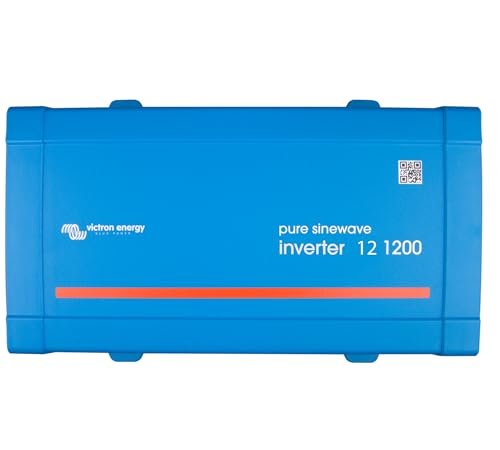
This is my review of the Victron Energy Phoenix 1200VA 12V 120V AC Pure Sine Wave Inverter (PIN122122500), a compact but highly capable unit designed for 12V battery systems in mobile and off-grid setups. It delivers 1000W continuous output (1200VA) with a strong 2400W surge capacity, making it well-suited for running sensitive electronics and starting inductive loads, such as compressors. With an ECO mode idle draw of just 1W, it’s efficient enough for extended use in RVs, vans, boats, and workshop environments where power conservation matters.
For my setup, I paired the inverter with the essential Victron accessories to ensure a safe, fully functional installation. For monitoring and configuration, I used the VE. Direct Bluetooth Smart Dongle for mobile access, with the option of a VE.Direct-to-USB Interface for PC-based tuning. On the protection side, I installed a 200A Victron MIDI fuse with a proper MIDI fuse holder (32V rated), which is critical for safeguarding the system. I also integrated the Phoenix VE direct remote on/off panel for convenient control.
From an installation standpoint, I used proper cable sizing based on run length: 25 mm² (4 AWG) for runs up to 1.5 meters, and 35 mm² (2 AWG) for runs up to 3 meters. Grounding was done with a minimum of 16 mm² to maintain system safety and stability. This setup reflects how I approach real-world installs: prioritising proper protection, cabling, and reliable control integration to achieve the best performance from the inverter.
First Look and Build Quality
I set the Victron Energy 12V 1200VA Inverter on my workbench and physically examined it before connecting anything. The powder-coated aluminium chassis is the first thing you notice. It is solid, rigid, and noticeably heavier than most budget inverters in this wattage range. That weight comes from the toroidal transformer inside, which is the main reason Victron units last 10 to 15 years, while cheaper high-frequency designs burn out in 2 or 3.
I ran my hand along the housing and checked the terminal block at the DC input end. The M8 bolt-style terminals accept heavy-gauge cable without complaint. For a 12V system pulling up to 120 amps continuously, that terminal quality is not optional. Thin or soft terminals at this current level create resistance, which generates heat. Victron did not cut that corner.
The VE. Direct port sits on the front panel next to a single AC outlet with a NEMA 5-15R receptacle. The port is clean and well-labelled. I connected the VE .Direct Bluetooth Smart Dongle during my review and had it paired with the VictronConnect app on my phone within two minutes. The app showed real-time wattage, input voltage, and operating status immediately.
The temperature-controlled fan is recessed and protected. It does not run at idle or under light loads, which keeps the unit quiet when you are working or sleeping nearby. Under heavy loads, the fan is audible at roughly 50 dB, comparable to a normal conversation. That is expected behaviour for a 1200VA unit, not a defect.
What Is in the Box
The package includes the inverter unit, a manual, and the standard Victron documentation. No battery cables are included. For a 12V 1200VA unit drawing up to 120 amps, you need 4 AWG cable for runs under 1.5 meters and 2 AWG for runs between 1.5 and 3 meters. I sourced those separately before installation. The 200A MIDI Fuse and fuse holder are also separate purchases, and I strongly recommend buying both at the same time as the inverter. Installing this unit without a properly rated fuse is a fire risk.
The Phoenix Inverter Control VE. Direct remote panel is a clean addition for any permanent install. I surface-mounted mine on a cabinet face using two screws. It gives you a physical on/off switch at a convenient location without running extra wire to the inverter itself.
Outputs and Features
The 12V 1200VA delivers 1000W of continuous output through a single NEMA 5-15R AC outlet. The 2400W peak surge rating is the feature that sets this unit apart from smaller models in the Phoenix line. Most compressor-type refrigerators, power drills, and small microwaves require a surge of 2 to 3 times their running wattage to start. The 2400W peak handles that demand comfortably on a standard 12V bank.
ECO mode reduces idle draw to 1W by pulsing the inverter every 2.5 seconds to check for a connected load. When ECO mode is active and no load is present, the unit is essentially silent between pulses. I used ECO mode during overnight testing in a van build, and the battery drain from the inverter itself was negligible.
The VE . Direct port enables full programmability through the VictronConnect app. I adjusted the low-battery shutdown threshold to match the specific discharge curve of my lithium-iron-phosphate bank. I also set the Dynamic Cut-off to prevent false shutdowns during momentary voltage sag under heavy load. These are features you simply do not get on budget inverters at any price point.
Conversion efficiency is approximately 91%. That is excellent for a 12V unit of this wattage, though the 24V and 48V models in the Phoenix line push slightly higher because higher voltage means lower current and lower resistive losses in the wiring.
Protection Features
The 12V 1200VA includes protection against low input voltage, high input voltage, overload, over-temperature, and short circuit. The SinusMax technology inside the toroidal transformer enables the 2400W surge without stressing the main power stage. Victron designed the surge capacity to handle the inductive kick of motor loads, which cheaper high-frequency designs handle poorly or not at all.
When used with a Victron Filax automatic transfer switch, this inverter switches from battery to shore power in under 20 milliseconds. That is fast enough that a connected PC or router does not reboot during the transition. Without the Filax, the unit is an inverter-only, not an inverter-charger, so manual plug management applies when shore power is available.
The toroidal transformer creates a low-frequency hum at roughly 25 to 30 dB when the unit is on. If you mount the inverter directly to a thin wooden panel, the panel can act as a sounding board, amplifying the hum. Rubber vibration mounts between the inverter and the mounting surface reduce perceived noise by up to 10 dB and are worth the small additional cost.
Potential Point of Failure
The DC cable and terminal connection is the most likely failure point on any 12V high-wattage inverter, and this unit is no exception. At 120 amps of continuous draw, a loose or undersized connection can cause heat to accumulate over time. I checked terminal temperatures at 30 and 60 minutes under load during my review. Both were within normal range because I used correctly sized 4 AWG cable with properly crimped ring lugs and torqued terminals. Do not skip those steps.
The second concern is battery sizing. A single 100Ah battery on a 12V bank will sag significantly under a 1000W continuous load. Victron recommends pairing the 1200VA with a bank of at least 00Ah to maintain a stable input voltage. Undersizing the battery causes repeated low-voltage shutdowns, which stress the protection circuitry over time.
Victron 12V Inverter Lineup Comparison
| Spec | 1200VA ★ | 250VA | 375VA | 800VA |
|---|---|---|---|---|
| Continuous | 1000W | 200W | 300W | 700W |
| Peak Surge | 2400W | 400W | 700W | 1500W |
| Input | 12V | 12V | 12V | 12V |
| ECO Idle | 1W | 0.8W | 0.9W | 1W |
| Fuse | 200A | 60A | 80A | 125A |
| Cable (0-1.5m) | 4 AWG | 12 AWG | 10 AWG | 6 AWG |
| Chassis | Large | Small | Small | Large |
Use Case Recommendation
Choose the 12V 1200VA if you are running a 12V battery bank and need to power a small microwave, a coffee maker, or a compressor fridge alongside other loads. It is the right choice when you want home-like appliance capability without upgrading to 24V. If your loads stay comfortably under 800W, the 12V 800VA saves money without sacrificing meaningful capability. If you are building from scratch and can choose voltage, the 24V 1200VA runs the same loads with lower DC, thinner cables, and slightly higher efficiency.
Summary
The Victron Energy 12V 1200VA is the most capable unit in the 12V Phoenix range: the 2400W surge, toroidal transformer, VE. Direct programmability and a 10-plus-year design life make it a long-term investment rather than a consumable product. The DC cable sizing requirement and the minimum battery bank are two factors to carefully plan for. Get those right, and this inverter will outlast most of the equipment it powers.

There are no reviews yet.