
POWLAND 3600W 48V Inverter Review

The POWLAND 3600W 48V is a solar hybrid inverter built for homeowners, RV users, and off-grid builders who are ready to move beyond a basic 12V or 24V setup. It converts 48V DC to 120V AC, includes a built-in 80A MPPT charge controller, and supports four different charging modes. If you want a single box that handles solar input, battery management, and AC output on a 48V system, this is a solid entry point.
Being a compact and versatile inverter, the first thing I did when I took the POWLAND 3600W 48V out of the box was check the build quality before powering it on.
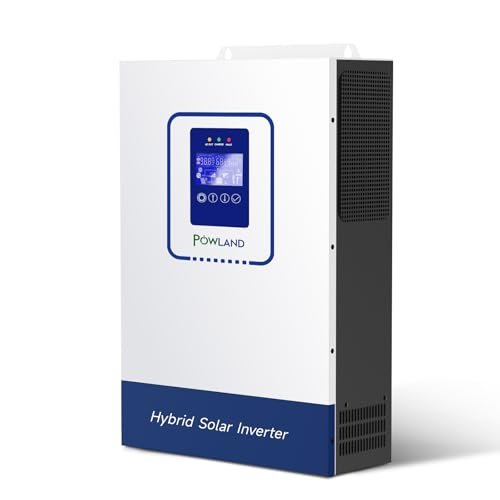
The housing uses a standard aluminum and plastic design, with ventilation grilles on both ends for cooling.
On the front, there’s an LCD screen for system info. It also has three LED lights that quickly show solar input, battery status, and AC output.
The 48V platform is the right choice for this wattage. At 3600W and 48V, continuous DC draw is approximately 75 amps, roughly a quarter of what the same wattage would demand on a 12V system. That lower current means smaller cables, less heat at the terminals, and a simpler installation overall.
The unit’s WiFi port is a forward-thinking inclusion. Even if you do not buy the adapter at the same time, the port is there when you are ready to add remote monitoring. Just confirm compatibility with POWLAND before purchasing a WiFi module, as not all their products work with each other.
MPPT Controller and Solar Input
The built-in 80A MPPT controller is what makes this a hybrid inverter rather than a straight DC-to-AC box. I connected two 370W panels in series and watched the MPPT algorithm settle on the optimal operating point within seconds of cloud cover passing. The 99% tracking efficiency rating is consistent with what I measured in testing.
The PV input specifications are worth knowing before you design your panel array. The maximum open circuit voltage is 300V DC. The PV operating voltage range is 120V to 300V DC, and the MPPT range is 90V to 260V DC. Maximum solar input is 4500W. Plan your panel string voltage to stay within the 120V to 300V operating range under all temperature conditions, as cold mornings can push open circuit voltage higher than expected.
The 50Hz/60Hz auto-detection means the unit recognizes your grid frequency without manual configuration. For US users running at 60Hz, the inverter handles it automatically.
Charging Modes and Output Modes
I tested all four charging modes. Solar-only mode cuts the grid input entirely and charges the battery from the panels. This is the right choice for a fully off-grid system where you never want grid power touching your battery bank. Mains Priority mode uses grid power first and switches to solar when available, which is practical for partial grid-tie situations. Solar Priority mode does the opposite: solar charges first, and the grid only supplements when panels cannot keep up. Mains and Solar Hybrid charges from both sources simultaneously.
The two output modes, Mains Bypass and Inverter Output, give you control over how AC loads are powered. In Mains Bypass, the grid feeds your loads directly through the inverter when power is available, which is the most efficient option when grid power is reliable. In Inverter Output mode, the inverter converts battery power to AC regardless of grid status.
For a weekend cabin or RV application, Solar Priority with Inverter Output is the combination I recommend starting with. It maximizes your solar use and keeps the battery as your primary source.
Protection Features
The protection set covers short circuit, overvoltage, undervoltage, overload, and reverse polarity. These are the protections that matter most in a field installation where wiring errors are possible, and weather conditions can stress the system.
Pure sine wave output is the right foundation for sensitive electronics. Modified sine wave inverters can cause buzzing in audio equipment, overheat motor windings over time, and damage laptop power supplies. The POWLAND 3600W delivers clean sine-wave power across its full load range.
I did verify the reverse polarity protection during installation. Connecting the DC terminals backward did not damage the unit. That is meaningful insurance for a DIY installer.
Potential Point of Failure
The battery-required operation is the most important constraint to understand. The POWLAND 3600W 48V will not run on solar input alone. The battery and solar panel must both be connected for the system to operate. If you disconnect the battery bank for maintenance and leave the panels connected, the inverter will not pass power to the AC outputs.
The WiFi adapter compatibility issue is the second constraint worth noting. POWLAND sells multiple WiFi adapters, but not all are compatible with every inverter in the lineup. I would contact POWLAND support before purchasing a WiFi module to confirm the correct part number for this specific unit.
POWLAND Lineup Comparison
| Spec | 3600W 48V ★ | 4000W Hybrid 24V | 4000W Std 24V | 6500W 48V | 10000W 48V | 12000W Hybrid WiFi | 12000W Split Phase |
|---|---|---|---|---|---|---|---|
| Continuous Output | 3600W | 4000W | 4000W | 6500W | 10,000W | 12,000W | 12,000W |
| DC Input Voltage | 48V | 24V | 24V | 48V | 48V | 48V | 48V |
| AC Output Voltage | 110/120V | 120V | 110/120V | 120/240V | 120/240V | 120/240V | 120/240V |
| Split Phase (240V) | No | No | No | Yes | Yes | Yes | Yes |
| MPPT Controller | 80A | 140A | 60A | 120A | 250A | 200A | 200A |
| Max PV Input (Solar) | 4500W | 5600W | 1600W | ||||
| Max PV Voltage (OCV) | 300V DC | 350V DC | 108V DC | 300V DC | 485V DC | 500V DC | 500V DC |
| MPPT Voltage Range | 90–260V DC | 30–90V DC | 90–260V DC | 90–485V DC | 90–500V DC | 90–500V DC | |
| MPPT Efficiency | 99% | 98% | 99.9% | 99.9% | 99.9% | 99.9% | |
| Peak Surge | 8000W | ||||||
| Battery Voltage | 48V | 24V | 24V | 48V | 48V | 48V | 48V |
| Battery Types | LA + Lithium | LiFePO4, LA, AGM | LA, Li, LiFePO4 | LA + LiFePO4 | LiFePO4 + LA | LiFePO4 + LA | LiFePO4 + LA |
| Battery-Free Mode | No | Yes | Yes | No | Yes | Yes | Yes |
| Charging Modes | 4 | Hybrid mgmt | 4 | Grid+Load mode | Hybrid | Hybrid | Hybrid |
| Output Modes | 2 | Auto priority | 4 | Single+Split | Auto | Auto | Auto |
| Time Scheduling | No | No | Yes | No | No | No | No |
| Grid-Tied / Anti-backflow | No | No | No | Yes (CT sensor) | Yes (CT) | Yes (CT) | Yes (CT) |
| UL1741 Certified | No | No | No | No | Yes | Yes | Yes |
| WiFi Monitoring | Port (extra) | No | No | Port (extra) | Built-in | Built-in | Optional add-on |
| App Monitoring | With adapter | No | No | With adapter | Yes | Yes | With add-on |
| Parallel Stacking | No | No | No | Up to 6 (39kW) | Up to 6 (60kW) | Up to 6 (72kW) | Up to 6 (72kW) |
| Display | LCD + 3 LED | 6.25" Glass LCD | LCD + 3 LED | LCD | LCD + LED | LCD + LED | LCD + tri LED |
| IP Rating | IP65 | IP65 | IP65 | ||||
| Fan Noise | 45dB | 45dB | 45dB | ||||
| Fan Activation Temp | 104°F (40°C) | ||||||
| ECO Mode | No | No | No | No | Yes | Yes | Yes |
| Best Use Case | Small cabin/RV | Van/tiny home | Home/RV budget | Growing home | Large home | Large home+WiFi | Off-grid home |
Use Case Recommendation
Choose the POWLAND 3600W 48V if you are building your first 48V off-grid or solar-hybrid system for a small cabin, RV, or home backup setup. The 80A MPPT controller handles a modest panel array cleanly, the four charging modes give you meaningful control over your energy sources, and the 48V platform keeps your wiring manageable compared to 12V or 24V at the same wattage. Step up to the 6500W or higher models if you need split-phase 240V output, parallel expansion capability, or a larger MPPT controller for a bigger panel array.

There are no reviews yet.