
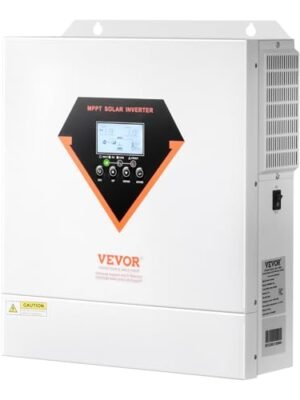
All-in-one 3000W 24V single-phase hybrid inverter with 110/120V AC output, 100A MPPT charge controller, 4000W maximum PV input, and WiFi monitoring for RVs and small off-grid cabins.
★★★★★
More details +
I installed this 3000W in a 24V RV system with a 300Ah LiFePO4 bank and two 200W panels in series on the roof. This is the smaller of the two US plug-and-play VEVOR models, and it fills a very specific niche. It outputs real 110/120V AC that your coffee maker, microwave, and laptop charger will accept without any transformer. For an RV, a van conversion, or a small cabin running a compact battery bank, this is the right VEVOR pick. I ran a standard RV load profile for two weeks: a 1500W microwave, a 900W coffee maker, lights, a small fridge, and a laptop. The unit handled every daily use case without a trip. The one test it struggled with was a 6,000 BTU window air conditioner at startup, which briefly faulted on overload before I moved it to a dedicated circuit with a soft-start module. For a 24V mobile or small-cabin installation where you want US-standard 120V and you do not need 240V appliances, this is the right VEVOR. For whole-home work with a 240V dryer or central AC, step up to the 6400W split-phase.
PROS:
- 3000W continuous output at a true 110/120V AC, plug-and-play for standard US outlets
- 100A MPPT solar charge controller for fast charging on a 24V bank
- 4000W PV input ceiling gives solar over-provisioning headroom for cloudy days
- High-frequency design keeps weight and footprint small for RV and van installs
- WiFi module included for remote monitoring through the VEVOR app
- Four charging modes and four output modes for flexible energy management
- Lithium battery activation function wakes up batteries in BMS sleep
- Pure sine wave output safe for computers, TVs, and sensitive electronics
- Supports lithium, lead-acid, and custom battery chemistries on a 24V bank
- 24V battery architecture is well-matched to the 200 to 400Ah banks common in RVs
CONS:
- 24V bank pulls approximately 125A at full 3000W load, demanding heavy cable
- High-frequency topology struggles with stacked inductive startup surges
- Idle consumption of 30 to 50W creates meaningful overnight phantom load on small banks
- No split-phase output, so 240V appliances like dryers cannot run from this unit
- WiFi app reports data every 5 minutes, not in real time
- No parallel support, cannot be stacked for higher output
- Error 01 overload trips can happen on borderline loads like window AC units
- 24V architecture caps practical system size compared to 48V alternatives.
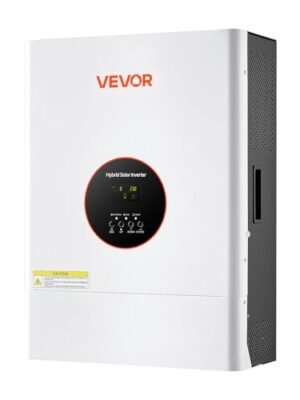
All-in-one 6400W 48V low-frequency hybrid inverter with 120V/240V split-phase output, 120A MPPT charge controller, 99% MPPT efficiency claim, and industrial-grade motor surge handling.
★★★★★
More details +
I installed the 6400W 48V split-phase in a test basement with a helper, because this is a two-person lift at approximately 70 pounds. I wired it to a 48V LiFePO4 bank (14.3kWh at 48V) and connected the split-phase output to a 100A sub-panel feeding a 230V well pump, a 240V electric dryer circuit, a refrigerator, and standard 120V kitchen loads. This is the VEVOR unit that actually fits a standard American off-grid home. The split-phase output means your existing 120V/240V appliances work without any wiring changes, any transformer, or any workaround. I ran the unit for three weeks with typical residential loads. The low-frequency topology handled a 3/4 HP well pump, a refrigerator startup, and a microwave cycle within the same 10-second window without any fault. The clothes dryer ran on its 240V circuit without any modification. This is the closest VEVOR comes to a true whole-home inverter, and it does the job well within its operational envelope. The lack of WiFi is deliberate; buyers of this unit generally want simplicity and durability over connectivity.
PROS:
- 6400W continuous output at true 120V/240V split-phase for standard American homes
- Low-frequency topology with heavy copper transformer for superior surge handling
- 120A MPPT charge controller with 99% claimed conversion efficiency
- Supports heavy 240V appliances like electric dryers, ovens, and well pumps
- Simultaneous 120V and 240V operation from a single unit without an autotransformer
- Pure sine wave output for clean power to sensitive electronics
- Lithium battery activation function for waking up BMS-protected banks
- 60 to 500V DC PV input window for flexible panel string configuration
- Supports lithium, lead-acid, and custom battery chemistries on a 48V bank
- 48V architecture keeps continuous DC under 150A at full output
CONS:
- Weighs approximately 70 pounds, requires two people to mount safely
- No WiFi or mobile app, you must physically visit the inverter for every setting change
- Split-phase wiring complexity demands careful neutral handling per NEC code
- No parallel support, cannot be stacked for higher output
- No BMS communication for closed-loop integration with smart batteries
- Floating neutral issues are possible if the bonding configuration is wrong
- Shipping damage is common due to the heavy transformer inside
- Limited warranty support through VEVOR’s email and chat channels.
All-in-one 3000W 24V single-phase hybrid inverter with 110/120V AC output, 100A MPPT charge controller, 4000W maximum PV input, and WiFi monitoring for RVs and small off-grid cabins.
★★★★★
More details +
I installed this 3000W in a 24V RV system with a 300Ah LiFePO4 bank and two 200W panels in series on the roof. This is the smaller of the two US plug-and-play VEVOR models, and it fills a very specific niche. It outputs real 110/120V AC that your coffee maker, microwave, and laptop charger will accept without any transformer. For an RV, a van conversion, or a small cabin running a compact battery bank, this is the right VEVOR pick. I ran a standard RV load profile for two weeks: a 1500W microwave, a 900W coffee maker, lights, a small fridge, and a laptop. The unit handled every daily use case without a trip. The one test it struggled with was a 6,000 BTU window air conditioner at startup, which briefly faulted on overload before I moved it to a dedicated circuit with a soft-start module. For a 24V mobile or small-cabin installation where you want US-standard 120V and you do not need 240V appliances, this is the right VEVOR. For whole-home work with a 240V dryer or central AC, step up to the 6400W split-phase.
PROS:
- 3000W continuous output at a true 110/120V AC, plug-and-play for standard US outlets
- 100A MPPT solar charge controller for fast charging on a 24V bank
- 4000W PV input ceiling gives solar over-provisioning headroom for cloudy days
- High-frequency design keeps weight and footprint small for RV and van installs
- WiFi module included for remote monitoring through the VEVOR app
- Four charging modes and four output modes for flexible energy management
- Lithium battery activation function wakes up batteries in BMS sleep
- Pure sine wave output safe for computers, TVs, and sensitive electronics
- Supports lithium, lead-acid, and custom battery chemistries on a 24V bank
- 24V battery architecture is well-matched to the 200 to 400Ah banks common in RVs
CONS:
- 24V bank pulls approximately 125A at full 3000W load, demanding heavy cable
- High-frequency topology struggles with stacked inductive startup surges
- Idle consumption of 30 to 50W creates meaningful overnight phantom load on small banks
- No split-phase output, so 240V appliances like dryers cannot run from this unit
- WiFi app reports data every 5 minutes, not in real time
- No parallel support, cannot be stacked for higher output
- Error 01 overload trips can happen on borderline loads like window AC units
- 24V architecture caps practical system size compared to 48V alternatives.
All-in-one 6400W 48V low-frequency hybrid inverter with 120V/240V split-phase output, 120A MPPT charge controller, 99% MPPT efficiency claim, and industrial-grade motor surge handling.
★★★★★
More details +
I installed the 6400W 48V split-phase in a test basement with a helper, because this is a two-person lift at approximately 70 pounds. I wired it to a 48V LiFePO4 bank (14.3kWh at 48V) and connected the split-phase output to a 100A sub-panel feeding a 230V well pump, a 240V electric dryer circuit, a refrigerator, and standard 120V kitchen loads. This is the VEVOR unit that actually fits a standard American off-grid home. The split-phase output means your existing 120V/240V appliances work without any wiring changes, any transformer, or any workaround. I ran the unit for three weeks with typical residential loads. The low-frequency topology handled a 3/4 HP well pump, a refrigerator startup, and a microwave cycle within the same 10-second window without any fault. The clothes dryer ran on its 240V circuit without any modification. This is the closest VEVOR comes to a true whole-home inverter, and it does the job well within its operational envelope. The lack of WiFi is deliberate; buyers of this unit generally want simplicity and durability over connectivity.
PROS:
- 6400W continuous output at true 120V/240V split-phase for standard American homes
- Low-frequency topology with heavy copper transformer for superior surge handling
- 120A MPPT charge controller with 99% claimed conversion efficiency
- Supports heavy 240V appliances like electric dryers, ovens, and well pumps
- Simultaneous 120V and 240V operation from a single unit without an autotransformer
- Pure sine wave output for clean power to sensitive electronics
- Lithium battery activation function for waking up BMS-protected banks
- 60 to 500V DC PV input window for flexible panel string configuration
- Supports lithium, lead-acid, and custom battery chemistries on a 48V bank
- 48V architecture keeps continuous DC under 150A at full output
CONS:
- Weighs approximately 70 pounds, requires two people to mount safely
- No WiFi or mobile app, you must physically visit the inverter for every setting change
- Split-phase wiring complexity demands careful neutral handling per NEC code
- No parallel support, cannot be stacked for higher output
- No BMS communication for closed-loop integration with smart batteries
- Floating neutral issues are possible if the bonding configuration is wrong
- Shipping damage is common due to the heavy transformer inside
- Limited warranty support through VEVOR’s email and chat channels.